





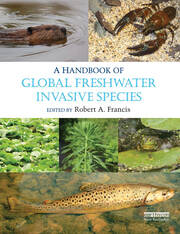
1st Edition
A Handbook of Global Freshwater Invasive Species
Contributors. Preface. Introduction. 1. Invasive Alien Species in Freshwater Ecosystems: A Brief Overview
Part 1: Aquatic and Riparian Plants 2. Alternanthera philoxeroides (Martius) Grisebach (Alligator Weed) 3. Crassula Helmsii (T. Kirk) Cockayne (New Zealand Pygmyweed) 4. Eichhornia Crassipes Mart. (Solms-Laubach) (Water Hyacinth) 5. Heracleum Mantegazzianum Sommier and Levier (Giant Hogweed) 6. Impatiens Glandulifera Royle (Himalayan Balsam) 7. Lagarosiphon Major (Ridley) Moss ex Wager (Curly Water Weed) 8. Lythrum Salicaria L. (Purple Loosestrife) 9. Myriophyllum Aquaticum (Vell.) Verdcourt (Parrot Feather) 10. Spartina Anglica C.E. Hubbard (English Cord-Grass) 11. Tamarix spp. (Tamarisk, Saltcedar)
Part 2: Aquatic Invertebrates 12. Aedes Albopictus Skuse (Asian Tiger Mosquito) 13. An Overview of Invasive Freshwater Cladocerans: Bythotrephes Longimanus Leydig As a Case Study 14. Invasive Freshwater Copepods of North America 15. Corbicula fluminea Muller (Asian Clam) 16. Eriocheir Sinensis H. Milne-Edwards (Chinese Mitten Crab) 17. Pacifastacus Leniusculus Dana (North American Signal Crayfish) 18. Apple Snails 19. Potamopyrgus Antipodarum J. E. Grey (New Zealand Mudsnail)
Part 3: Fish 20. Bigheaded Carps of the Genus Hypophthalmichthys 21. Cyprinus Carpio L. (Common carp) 22. Gambusia Affinis (Baird and Girard) and Gambusia Holbrooki Girard (Mosquitofish) 23. Pseudorasbora Parva Temminck and Schlegel (Topmouth Gudgeon) 24. Salmo Trutta L. (Brown Trout)
Part 4: Amphibians and Reptiles 25. Rhinella Marina L. (Cane Toad) 26. Eleutherodactylus Coqui Thomas (Caribbean Tree Frog) 27. Rana (Lithobates) Catesbeiana Shaw (American Bullfrog) 28. Trachemys Scripta (Slider Terrapin)
Part 5: Aquatic and Riparian Mammals 29. Castor Canadensis Kuhl (North American Beaver) 30. Myocastor Coypus Molina (Coypu) 31. Neovison Vison Schreber (American Mink)
Part 6: Aquatic Pathogens 32. Bothriocephalus Acheilognathi Yamaguti (Asian Tapeworm) 33. Centrocestus Frmosanus Nishigori (The Asian Gill-Trematode) 34. Myxobolus Cerebralis Hofer (Whirling Disease). Conclusion 35. Management of Freshwater Invasive Alien Species.
Index
Biography
Robert A. Francis is a Senior Lecturer in Ecology at King's College London, UK. He has broad research interests in aquatic, riparian and urban ecology and has been secretary of the British Ecological Society special interest group on invasive species since 2008.
"A comprehensive compendium of the major alien plant, animal and pathogen species that threaten riparian, freshwater and brackish ecosystems around the world. Each chapter, authored by leading international experts, ensures a thorough and up-to-date treatment of the history, ecology, distribution, impacts and management of over 30 key species. Taken together, this volume provides an outstanding resource for invasion ecologists, freshwater biologist and catchment scientists." – Philip E Hulme, Professor of Plant Biosecurity, The Bio-Protection Research Centre, Lincoln University, Christchurch, New Zealand
"Freshwater ecosystems are among the most susceptible to invasion by introduced species. Invasive plants, invertebrates, fishes, amphibians and reptiles, mammals, and pathogens are interacting with other agents of change to threaten biodiversity and disrupt the provision of ecosystem services in these ecosystems worldwide. This important volume brings together insights from 63 contributors to review available knowledge and define new challenges and priorities for research and management. It is sure to stand as the primary source of information on invasive species in freshwater ecosystems for many years to come." – David M. Richardson, Centre for Invasion Biology, Stellenbosch University, South Africa
"This Handbook is a must-read for anyone seriously concerned with aquatic invasions. Its detailed yet readable accounts of impacts and management approaches for important introduced plants, animals, and parasites will serve as authoritative references for years to come." – Daniel Simberloff, Nancy Gore Hunger Professor of Environmental Studies, University of Tennessee and Editor-in-Chief, Biological Invasions
