




256 Pages
by
Routledge
252 Pages
by
Routledge
256 Pages
by
Routledge
Also available as eBook on:
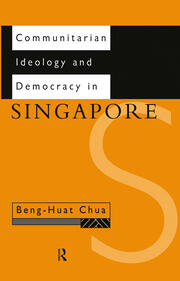
The economic success of Singapore has established the country as a model for other nations. Yet until now the ideas behind this accomplishment have not been critically examined. Communitarian Ideology and Democracy in Singapore fills this gap. The book outlines the policies the ruling party has adopted over the past three decades. It charts the government's move away from Western concepts... Read more
Introduction 1 Ideological trajectory: from authoritarianism to Communitarianism 2 Reopening ideological discussion 3 Pragmatism of the PAP government: a critical Assessment 4 The business of living: transformation of everyday life 5 The making of a new nation: cultural construction and national identity 6 Not depoliticised but ideologically successful: the public housing programme 7 Confucianisation abandoned 8 Building the political middle ground 9 Towards a non-liberal communitarian democracy, Conclusion
Biography
Chua Beng-Huat is Senior Lecturer in the Department of Sociology at the National University of Singapore.
'As a reading of post-colonial Singapore history it is an invaluable text, as it recasts the developments of the last three decades in a new analytical light, and is full of useful interpretations of material which in themselves would be familiar to any informed commentator on this fascinating little society, and it raises important questions about the future of democracy.' - Journal of Southeast Asian Studies, Vol 29 No.2 98
