





200 Pages
by
Routledge
200 Pages
by
Routledge
200 Pages
by
Routledge
Also available as eBook on:
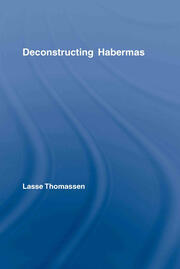
This book is the first book-length deconstructive study of the political philosophy of Jürgen Habermas. Inspired by the work of Jacques Derrida, the book applies deconstruction to key issues in Habermas’s work: rational discourse and rational consensus, constitutional democracy, tolerance and civil disobedience.
The war in Iraq brought Habermas and Derrida together in defense of... Read more
Introduction: Deconstructing Habermas 1. The Aporias of Rational Consensus 2. ‘A Bizarre, even Opaque Practice’: Constitutionalism and Democracy 3. The Inclusion of the Other?: Tolerance 4. Civil Disobedience within the Limits of Deliberative Reason Alone 5. Towards an Ethics of Discussion
Biography
Lasse Thomassen is Lecturer in Political Theory in the School of Politics and International Relations at Queen Mary, University of London. He is the editor of Habermas: A Guide for the Perplexed (Continuum, 2010) and, with Lars Tønder, co-editor of Radical democracy: Politics between abundance and lack (Manchester University Press, 2005).
