




1st Edition
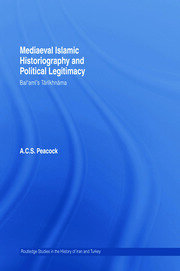
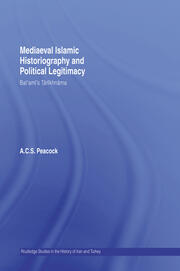
Mediaeval Islamic Historiography and Political Legitimacy Bal'ami's Tarikhnamah
The Tarikhnamah is a history of the world and the oldest surviving work of Persian prose. This book examines it as a political and cultural document and why it became such an influential work in the Islamic world.
Preface. Acknowledgements. Abbreviations. Introduction 1. Politics, religion and culture in the late Samanid state 2. The transmission of the Tarikhnama’s text 3. Bal‘ami’s reshaping of Tabari’s History 4. The contents and purpose of Bal‘ami’s alterations to Tabari’s History 5. The Tarikhnama after Bal‘ami 6. General conclusions. Appendix I: Comparison of postulated redactions of the Tarikhnama. Appendix II: Comparison of the Arabic translation of the Tarikhnama and the Persian text. Appendix III: Addenda and corrigenda to Daniel’s ‘Annotated Inventory of Bal‘ami' Manuscripts’. Bibliography
Biography
Dr Andrew Peacock was educated at Oxford and Cambridge, and is a research associate at the University of Cambridge. He specialises in history of Anatolia, the Caucasus and Central Asia, and is the author of several articles on aspects of mediaeval Islamic history and historiography.
