




1st Edition
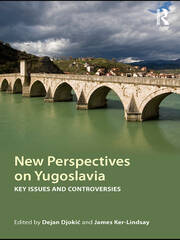
New Perspectives on Yugoslavia Key Issues and Controversies
Introduction Dejan Djokić and James Ker-Lindsay 1. Yugoslavism in the Early Twentieth Century: The Politics of the Yugoslav Committee Connie Robinson 2. The Great War and the Yugoslav Grassroots: Popular Mobilisation in the Habsburg Monarchy, 1914-18 Mark Cornwall 3. Forging a United Kingdom of Serbs, Croats, and Slovenes: The Legacy of the First World War and the ‘Invalid Question’ John Paul Newman 4. National Mobilisation in the 1930s: The Emergence of the ‘Serb Question’ in the Kingdom of Yugoslavia Dejan Djokić 5. Ethnic Violence in Occupied Yugoslavia: Mass Killing from Above and Below Tomislav Dulić 6. Yugoslavia in Exile: The London-based Wartime Government, 1941-45 Stevan K. Pavlowitch 7. Reassessing Socialist Yugoslavia, 1945-90: The Case of Croatia Dejan Jović 8. The Break-Up of Yugoslavia: The Role of Popular Politics Nebojša Vladisavljević 9. Popular Mobilisation in the 1990s: Nationalism, Democracy and the Slow Decline of the Milošević Regime Florian Bieber 10. The ‘Final’ Yugoslav Issue: The Evolution of International Thinking on Kosovo, 1998-2005 James Ker-Lindsay 11. Coming to Terms with the Past: Transitional Justice and Reconciliation in the Post-Yugoslav Lands Jasna Dragović-Soso and Eric Gordy
Biography
Dejan Djokić is Senior Lecturer in History at Goldsmiths, University of London. His publications include Elusive Compromise: A History of Interwar Yugoslavia (2007) and Nikola Pašić and Ante Trumbić: The Kingdom of Serbs, Croats and Slovenes (2010).
James Ker-Lindsay is Eurobank EFG Senior Research Fellow on the Politics of South East Europe at the London School of Economics and Political Science. He is also the author of Kosovo: The Path to Contested Statehood in the Balkans.
"...this is a crucial book which painstakingly restores half-forgotten acotrs to the historical stage. It is indispensable reading for scholars and students alike, as it redresses the balance of agency between elite and non-elite actors, while at the same time highlighting the multifaceted nature of the political issues with which Yugoslavia was faced in both of its incarnations." - Richard Mills, University of East Anglia in European History Quarterly
