




1st Edition
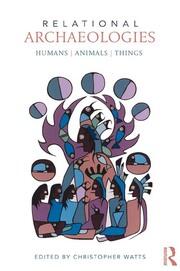
Relational Archaeologies Humans, Animals, Things
1. Relational archaeologies: roots and routes Christopher Watts 2. Inhuman eyes: looking at Chavín de Huantar Mary Weismantel 3. Theater of predation: beneath the skin of Göbekli Tepe images Dušan Boric 4. The bear-able likeness of being: ursine remains at the Shamanka II cemetery, Lake Baikal, Siberia Robert J. Losey, Vladimir I. Bazaliiskii, Angela R. Lieverse, Andrea Waters-Rist, Kate Faccia, and Andrzej W. Weber 5. Between the living and the dead: relational ontologies and the ritual dimensions of dugong hunting across Torres Strait Ian J. McNiven 6. Methodological and analytical challenges in relational archaeologies: a view from the hunting ground María Nieves Zedeño 7. Identity communities and material practices: relational logics in the U.S. Southwest Wendi Field Murray and Barbara J. Mills 8. Intimate connection: bodies and substances in flux in the early Neolithic of central Europe Daniela Hofmann 9. Relational communities in prehistoric Britain Oliver J. T. Harris 10. Shifting horizons and emerging ontologies in the Bronze Age Aegean Andrew Shapland 11. Classicism and knowing the world in early modern Sweden Vesa-Pekka Herva and Jonas M. Nordin 12. The imbrication of human and animal paths: an Arctic case study Peter Whitridge 13. The maze and the labyrinth: reflections of a fellow-traveller Tim Ingold
Biography
Watts, Christopher
“Ontologies, and the allied concepts of personhood, relationality and perspectivism, are hot topics these days in archaeology and anthropology. Relational Archaeologies convinced me, at any rate, that they are more than just the latest buzzwords; they offer new and rewarding ways to approach our material. These concepts are most often applied to foragers and horticulturalists, so it is particularly noteworthy that this volume demonstrates their value for a wide range of societies, including complex, urban ones… This book merits reading cover to cover.” - Nerissa Russell, Cornell University
