




1st Edition
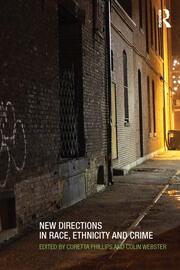
New Directions in Race, Ethnicity and Crime
1. Introduction: bending the paradigm - new directions and new generations, Coretta Phillips and Colin Webster 2. 'Anti-Semitism' and anti-Jewish hatred: conceptual, political and legal challenges, Paul Iganski 3. Negotiating identities: ethnicity, religion and social cohesion in London and Bradford, Colin Webster 4. We belong to Glasgow: the thirdspace of youth 'gangs' and asylum seeker, refugee and migrant groups, Alistair Fraser and Teresa Piacentini 5. Citizenship and belonging in a women's immigration detention centre, Mary Bosworth and Blerina Kellezi 6. Black perspectives on race, crime and justice, Suzella Palmer 7. Configuring ethnic identities: resistance as a response to counter-terrorist policy, Alpa Parmar 8. Offenders or victims? An exploration of Gypsies and Travellers as a policing paradox, Zoë James 9. Inside white - racism, social relations and ethnicity in English prison, Rod Earle 10. New directions and new generations - old and new racism? Coretta Phillips and Colin Webster
Biography
Coretta Phillips is Senior Lecturer in Social Policy at the London School of Economics and Political Science.
Colin Webster is Reader in Criminology at Leeds Metropolitan University and Visiting Research Fellow at Teesside University.
‘This book offers an interesting methodological and theoretical exploration of contemporary issues relating to race, crime and justice. It is a must for students and anyone else keen to expand their knowledge and critical awareness of the subject area.’
Dr Tina G. Patel, Lecturer in Criminology, University of Salford, UK
‘Corretta Phillips and Colin Webster have put together a critically important collection of articles devoted to traditionally neglected areas of race, ethnicity and crime. The diverse set of contributors provide unique and thoughtful insights into timely topics including: hate crimes; increasing diversity in Scotland; the plight of gypsies; ethnicity and counterterrorism strategies; the experience of women in an immigration detention center; and black perspectives on crime and justice. Collectively, the volume unmistakably expands the conversation on race and crime.
I anticipate that in the future scholars will refer to this volume as being an essential one in the lineage of race and crime scholarship.’
Shaun L. Gabbidon, Ph.D., Distinguished Professor of Criminal Justice, Penn State Harrisburg, USA
