





1st Edition
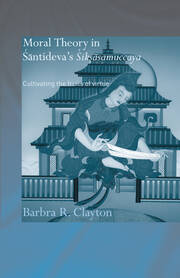
Moral Theory in Santideva's Siksasamuccaya Cultivating the Fruits of Virtue
By Barbra R. Clayton
Copyright 2006
182 Pages
by
Routledge
184 Pages
1 B/W Illustrations
by
Routledge
192 Pages
1 B/W Illustrations
by
Routledge
Also available as eBook on:
This important text analyzes the moral theory of the seventh century Indian Mahayana master, Santideva, author of the well-known religious poem, the Bodhicaryavatara (Entering the Path of Enlightenment) as well as the significant, but relatively overlooked, Siksasamuccaya (Compendium of Teachings).
With particular focus on the Siksasamuccaya , this book uses original translations and... Read more
1. Explanation of the Scope and Rationale for the Book, and the Questions to be Addressed 2. Discussion of the Author and his Work. Outline of the Structure of the Siksasamuccaya 3. Description of Santideva's Ethics Using Textual Analysis of the Siksasamuccaya 4. A Meta-Ethical Analysis of the Meanings and Rationale Associated with Key Moral Concepts, viz., Virtuous Conduct, Skillfulness, and Karmic Fruitfulness 5. Assessment of Santideva's Moral Theory and Comparison with Available Scholarship on Theravada and Mahayana Buddhist Ethics, and Comparison with Western Moral Theories 6. Response to the Question: Are Buddhist Ethics Homogeneous? Discussion of the Value of Comparative Ethics
Biography
Barbra R. Clayton received her PhD in Asian Religions from McGill University, Canada. Currently, she is Assistant Professor for Eastern Religions at Mount Allison University, Canada.
'This study, through its de-tailed description of an important Indian Mahayana text, adds necessary nuance to the growing body of literature on Buddhist ethics, and doub-tlessly will remain a useful introduction to Santideva’s ethical thinking for some time to come. '- Journal of Buddhist Ethics, 2008
