




1st Edition
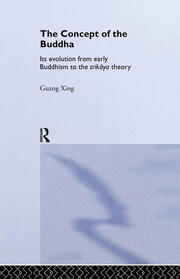
The Concept of the Buddha Its Evolution from Early Buddhism to the Trikaya Theory
By Guang Xing
Copyright 2005
266 Pages
by
Routledge
272 Pages
by
Routledge
272 Pages
by
Routledge
Also available as eBook on:
Guang Xing gives an analysis of one of the fundamental Mahayana Buddhist teachings, namely the three bodies of the Buddha (the trikaya Theory), which is considered the foundation of Mahayana philosophy. He examines how and why the philosophical concept of three bodies was formed, particularly the Sambhogakaya , which is the Buddha to be worshipped by all Mayahanists. Written in... Read more
Introduction 1. The Concept of the Buddha in Early Buddhism 2. The Concept of the Buddha in the Early Indian Buddhist Schools: Sarvastivada 3. The Concept of the Buddha in the Early Indian Buddhist Schools: Mahasamghika and Other Schools 4. The Origins and Development of the Dharmakaya 5. The Origins and Development of the Sambhogakaya 6. The Origins and Development of the Nirmanakaya 7. The Attributes of the Buddha and Other Buddhas in Early and Middle Mahayana Sutras Conclusion: The Five Basic Stages in the Development of the Concept of the Buddha
Biography
Guang Xing obtained his PhD from the School of Oriental and African Studies, London in 2003. He is a research assistant professor at the Centre of Buddhist Studies, the University of Hong Kong. His research interests are Chinese and Mahayana Buddhist studies, particularly the origin of Mahayana.
