
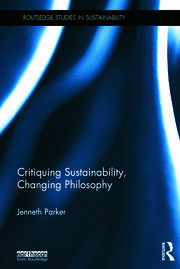
Critiquing Sustainability, Changing Philosophy
By Jenneth Parker
To Be Published November 15th 2013 by Routledge – 224 pages
To increasing numbers of people, sustainability is the key challenge of the twenty-first century. In the many fields where it is a goal, persistent problems obstruct the efforts of those trying to make a difference. The task of this book is to identify the philosophical failings underlying these problems, on the basis that the ways in which we conceptualise sustainability may contribute to, or alternately undermine vital projects.
Using a critical realist approach, the defining aspects of sustainability are identified in order to propose a criteria of adequacy for any project, initiative or policy. This innovative work demonstrates the positive contribution that can be made to this field by an approach based in critical realism or dialectical critical realism.
This study includes:
Issues addressed in this context include: climate change initiatives and policies; new economics attempts to re-frame development for sustainability; the bio-fuels and food dilemma; social policy and rising inequality; poverty increases due to environmental degradation; renewed emphasis on ‘leadership’ for sustainability versus democratisation; conservatism and conservation; power, knowledge and sustainability in social movements; approaches to the reform or dissolution of capitalism.
This very topical book will be a valuable source of information and debate for postgraduates and professionals with an interest in sustainability, critical realism or social systems.
Introduction Part 1: Sustainability as a Research Programme 1. Social and Political Context 2. Sustainability – what Kind of Philosophical Engagement so fFr? 3. Scales: Geographical, Timescales, Scales of Agency 4. Governance and Understanding: Politics of Sustainability Knowledge Part 2: Complex World System – Specific Philosophical Responses 5. Philosophies of Biology/Evolution – the Life sciences 6. Earth System Science – Uncertainty and Complexity 7. Reviewing Specific Philosophies 8. Philosophical Naturalism Part 3: Philosophical Anthropology of Sustainability 9. Models of Human Being 10. Models of Human Being: their Ethical and Political Possibilities Part 4: Conclusions 11.Criteria of Adequacy for Sustainability
Dr Jenneth Parker is Visiting Fellow at the Graduate School of Education, University of Bristol, UK. Her areas of research include Education for Sustainable Development (ESD) including politics of knowledge; Interdisciplinary Communication for Sustainable Development, including leadership, skills and competencies for Interdisciplinary working; Philosophical problems of Sustainable Development, linking ethics of care, systems theory and critical realism.
Name: Critiquing Sustainability, Changing Philosophy (Hardback) – Routledge
Description: By Jenneth Parker. To increasing numbers of people, sustainability is the key challenge of the twenty-first century. In the many fields where it is a goal, persistent problems obstruct the efforts of those trying to make a difference. The task of this book is to identify...
Categories: Sustainable Development, Environmental Politics, Critical Thinking, Cultural Theory
