





1st Edition
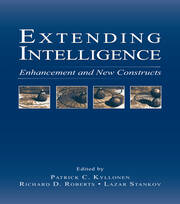
Extending Intelligence Enhancement and New Constructs
408 Pages
by
Routledge
408 Pages
by
Routledge
488 Pages
by
Routledge
Also available as eBook on:
This volume presents research from a variety of perspectives on the enhancement of human intelligence. It is organized around five themes – enhancement via instruction; enhancement via development (over the life cycle); enhancement over time; enhancement via new constructs; and new directions in enhancement. Three key issues are addressed: First, although most of the scientific research on... Read more
Contents: S. Irvine, Foreword. Part I: General Background. P.C. Kyllonen, L. Stankov, R.D. Roberts, Enhancements and New Constructs: Overview and Rationale. Part II: Enhancement Via Instruction. E. Hunt, Improving Intelligence: What's the Difference From Education? J-E. Gustafsson, Schooling and Intelligence: Effects of Track of Study on Level and Profile of Cognitive Abilities. F.A. Campbell, The Malleability of the Cognitive Development of Children of Low-Income African American Families: Intellectual Test Performance Over Twenty-One Years. N. Brody, Does Education Influence Intelligence? Part III: Enhancement Via Development. J. Comer, Child Development: The Under-Weighted Aspect of Intelligence. D. Lubinski, A. Bleske-Recheck, Enhancing Development in Intellectually Talented Populations. J.J. McArdle, Studies of the Impacts of Minimum Academic Standards (Pop 48) on the Academic Achievements of College Student-Athletes. E. Grigorenko, L. Jarvin, W. Niu, D. Preiss, Is There a Standard for Standardized Testing? Four Sketches of the Applicability (or Lack Thereof) of Standardized Testing in Different Educational Systems. Part IV: Enhancement Over Time. J. Horn, Spearman, g, Expertise, and the Nature of Human Cognitive Capability. R. Kliegl, D. Philipp, Becoming a Demosthenes! Compensating Age-Related Memory Deficits With Expert Strategies. J.R. Flynn, The History of the American Mind in the 20th Century: A Scenario to Explain IQ Gains Over Time and a Case for the Irrelevance of g. Part V: Enhancement Via New Constructs. R.J. Sternberg, g, g's, or Jeez: Which Is the Best Model for Developing Abilities, Competencies, and Expertise? J.D. Mayer, P. Salovey, D.R. Caruso, What Is Emotional Intelligence and What Does It Predict? D.F. Halpern, Is Intelligence Critical Thinking? Why We Need a New Definition of Intelligence. Part VI: New Directions in Enhancement. D. Benton, Nutrition and Intellectual Development. B. Rhodes, Challenges and Opportunities for Intelligence Augmentation. D. Dinges, N.L. Rogers, The Future of Human Intelligence: Enhancing Cognitive Capacity in a 24/7 World. Part VII: Conclusions. R.D. Roberts, P.C. Kyllonen, L. Stankov, Extending Intelligence: Conclusions and Future Directions.
Biography
Patrick C. Kyllonen, Richard D. Roberts, Lazar Stankov
