




1st Edition
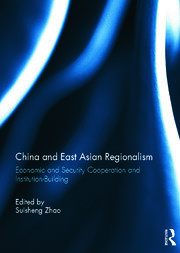
China and East Asian Regionalism Economic and Security Cooperation and Institution-Building
Part 1: China’s Strategic Thinking on East Asian Regionalism 1. China’s Approach toward Regional Cooperation in East Asia: Motivations and Calculations 2. Post Cold War Evolution of Chinese Thinking on Regional Institutions in Northeast Asia 3. Between Adapting and Shaping: China’s Role in Asian Regional Cooperation 4. The Rise of China and the Vision for an East Asian Community Part 2: China and Regional Economic and Trade Cooperation 5. Domestic Institutional Constraints on China’s Leadership in East Asian Economic Cooperation Mechanisms 6. Multilateralism vs. Regionalism in China’s Foreign Trade Policy: Explaining China’s Pursuit of Regional Free Trade Agreements 7. ASEAN-China Trade Flows: Moving Forward with ACFTA 8. A Chinese Renaissance in an Unremittingly Integrating Asian Economy Part 3: China and Regional Security and Energy Cooperation 9. China, the United States and Prospects for Asian Space Cooperation 10. China's Role in Establishing and Building the Shanghai Cooperation Organization (SCO) 11. China and Maritime Cooperation in East Asia: Recent Developments and Future Prospects 12. US-China Energy Relations and Energy Institution Building in the Asia-Pacific
Biography
Suisheng Zhao is Professor and Executive Director of the Center for China-US Cooperation at Josef Korbel School of International Studies, University of Denver. A founding editor of the Journal of Contemporary China, he is the author and editor of more than ten books.
"The research contained within this volume can definitely help readers to understand the change and consistency of China's approach toward regionalism that constitutes the essence behind these new strategies. The works showcased in this collection are a great boon to those interested in the topic of Chinese and East Asian regionalism and integration as they ultimately promote the transparency of this critical region and thus facilitate greater communication and cooperation".
- Xiaoyun Liu
China and East Asian Regionalism: Economic and Security Cooperation and Institution-Building
the journal of Turkish Weekly
