




1st Edition
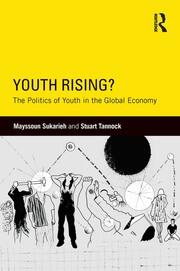
Youth Rising? The Politics of Youth in the Global Economy
List of Figures
Series Editor Preface
Acknowledgement
Introduction
Chapter One: The Neoliberal Embrace of Youth
Chapter Two: Youth and Capitalism in History
Chapter Three: The Spectre of Youth Unemployment
Chapter Four: Youth as a Revolutionary Subject?
Chapter Five: Education, Protest & the Continuing Extension of Youth
Conclusion
References
Biography
Mayssoun Sukarieh is a Postdoctoral Fellow at the Cogut Center for the Humanities at Brown University.
Stuart Tannock is a Senior Lecturer at the School of Social Sciences at Cardiff University.
"A much needed critique of neo-liberal use of "youth" to disguise class and nourish generational gaps. Dynamite in its implications." - Laura Nader, Professor of Anthropology, UC Berkeley
"Sukarieh and Tannock have written a groundbreaking book that will help to redefine the field of youth studies by providing a much-needed political-economy analysis of youth. Their analysis positions young people—indeed the current concept of youth—within the neoliberal context of social control and exploitation, thereby challenging youth researchers to re-evaluate their excessively positive representations of the youth period." - James Côté, Professor of Sociology, The University of Western Ontario
"Youth Rising? begins from the position that a critical engagement with the concept of youth is crucial in today’s political landscape... Ultimately, the fetishization of youth is rejected for the argument that social transformation cannot emerge from any single group, abstracted from the broader racialized, gendered, and classed relations of society."— Sara Carpenter, Adult Education Quarterly
