




1st Edition
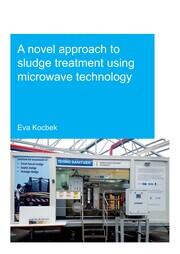
A Novel Approach to Sludge Treatment Using Microwave Technology
Introduction, Microwave treatment of municipal sewage sludge: Evaluation of the drying performance and energy demand of a pilot-scale microwave drying system, Microwave treatment of municipal sewage sludge: Effects of the sludge thickness and sludge mass load on the drying performance, Effects of the sludge physical-chemical properties on the microwave drying performance of the sludge, Novel decentralised mobile system for the sanitization and dehydration of the sludge: A pilot evaluation in the Jordan Valley, Reflections and outlook.
Biography
Eva Kocbek completed her bachelor’s degree in Mechanical Engineering at the University of Maribor, Slovenia, specializing in Energy, Process, and Environmental Engineering. After graduation, she gained valuable practical experience in engineering and designing solutions for drinking applications with specialized water and wastewater company in Slovenia. To extend her working knowledge and understanding of water and sanitation, she later completed a Master of Water Engineering at the UNESCO-IHE Delft Institute for Water Education in Delft, The Netherlands. Driven by research and innovations, she started her doctoral research as part of a joint program at the Delft University of Technology, Faculty of Applied Science, Department of Biotechnology, and IHE Delft Institute for Water Education (formerly known as UNESCO-IHE), Department of Environmental Engineering and Water Technology. Her research project was developed and funded within the framework of the Programmatic Cooperation Dutch Ministry of Foreign Affairs and the IHE Delft (DUPC2) initiative. The underlying goal of the study was to develop a portable microwave-based treatment system for on-site faecal sludge management for the humanitarian and development WASH sector. She is currently working in the field of research, design, and operation of systems to address issues in the area of i) drinking water preparations, ii) the provision of ultra-pure water for dialysis centres, process water, and iii) sludge treatment.
