




1st Edition
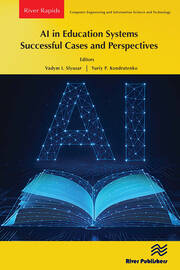
AI in Education Systems: Successful Cases and Perspectives
1. General Characteristics of the Large Language Models and Comparative Analysis
V. I. Slyusar, Z. Gomolka, and Y. P. Kondratenko
2. Analysis of Successful AI Applications in the Education Environment
Y. P. Kondratenko, M. B. Solesvik, N. Y. Kondratenko, and Z. Gomolka
3. AI and Digital Evolution in the Education System of Ukraine
Y.P. Kondratenko, Y.D. Zhukov, A.I. Shevchenko, O.Y. Zhukova, and O.S. Striuk
4. Best Strategies for Bilingual Education: How Can We Explain Their Success?
Claudia Cabrera, Olga Kosheleva, Christian Servin, and Vladik Kreinovich
5. Challenges and Risks of Uncontrolled AI Use by Students and Schoolchildren
Y. P. Kondratenko, N. Y. Kondratenko, and V. I. Slyusar
6. From Machine Learning to Human Learning: What Can Pedagogy Learn from AI Successes
Victor Timchenko, Yuriy Kondratenko Olga Kosheleva, and Vladik Kreinovich
7. Perspectives of the AI Applications for Improving Learning and Teaching Processes
V. I. Slyusar
Biography
Vadym Slyusar is a Doctor of Sciences, Professor, and Honored Worker of Science and Technology of Ukraine (2008). He received his Candidate of Sciences degree in 1992, his Doctor of Sciences degree in 2000, and was awarded the academic title of Professor in the specialty “Military Cybernetics, Control Systems, and Communications” (2005). Prof. Slyusar is the author of over 1010 publications, including 72 copyright certificates and patents. As a scientific advisor and supervisor, he has guided 16 Candidates of Sciences and 2 Doctors of Sciences, cultivating the next generation of researchers in critical technological domains. He is an innovative and forward-thinking researcher with extensive experience in artificial intelligence (AI), quantum systems, and radio frequency engineering. He is also recognized as a pioneer of concepts N-OFDM (1992), UAV swarm-based air defense systems (2019), and multi-agent LLM architectures for robotic platforms. He introduced novel matrix operations that are now widely applied in AI and statistical data processing. His contributions have led to new research directions in data transmission and MIMO systems, as well as technological advancements in both hardware and software, including augmented and mixed reality systems. He demonstrated the ability to identify emerging trends ahead of their time and transform abstract concepts into implementable and efficient solutions.
Yuriy Kondratenko is a Doctor of Science, Professor, Honour Inventor of Ukraine (2008), Corresponding Academician of Royal Academy of Doctors – Barcelona 1914 (Spain), Corresponding Academician of Royal Academy RACEF (Spain), Head of the Department of Intelligent Information Systems at Petro Mohyla Black Sea National University (PMBSNU), Leading Researcher at the Institute of Artificial Intelligence Problems of Ministry of Education and Science and National Academy of Sciences of Ukraine. He received his Ph.D. (1983) and Dr.Sc. (1994) in Elements and Devices of Computer and Control Systems from Odessa National Polytechnic University. He has received several international grants and scholarships for conducting research at Institute of Automation of Chongqing University, P.R. China (1988–1989), Ruhr-University Bochum, Germany (2000, 2010), Nazareth College and Cleveland State University, USA (2003). He also received a Fulbright Scholarship for research in USA (2015/2016) at the Dept. of Electrical Engineering and Computer Science at Cleveland State University. He is Guest Editor of 3 Special Issues of River Publishers Journal of Mobile Multimedia and an Editor of several River Publishers monographs, including Advances in Intelligent Robotics and Collaborative Automation (2015), Control Systems: Theory and Applications (2018), Advanced Control Systems: Theory and Applications (2021), Recent Developments in Automatic Control Systems (2022) and Research Tendencies and Prospect Domains for AI Development and Implementation (2024). Research interests include artificial intelligence, robotics, automation, sensors and control systems, intelligent decision support systems, and fuzzy logic
