





1st Edition
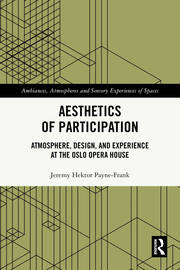
Aesthetics of Participation Atmosphere, Design, and Experience at the Oslo Opera House
Chapter 1. Introduction: The Oslo Opera House
A social monument
Tourists and locals
An atmospheric lens
The Nordic invitation to participate
Immaterial architecture
Chapter 2. Adopting an atmospheric lens
Atmospheric perspectives: Böhme, Rancière, and Sloterdijk
Thinking about atmospheres
Building experience: architecture and atmosphere
Coercive atmosphere
Research atmosphere: methods and tools
Withdrawing from atmosphere: taking photography seriously
Pinholes and fuzzy
Chapter 3. Transformative participation
The road to Bjørvika
The Fjord City
Bjørvika and beyond
Snøhetta
A Nolli map
Competition entry 04321
The art
A stone saga
Rethinking participation: Arnstein’s ladder
Chapter 4. Material participation
From the city to the roof
Marble: surfaces of the white carpet
Whiteness
Marble’s social and synaesthetic character
Whiteness and a cleansing of the eye
Whiteness and blur
Designing ambiguity: the palace, whiteness, and a Norwegian sensibility to nature
Chapter 5. Movement participation
Architecture of the oblique
Dwelling, tripping, inhabiting
Life in the Norwegian open air
Resonance, dissonance, and a good-natured elitism
Chapter 6. Light participation
Nordic light, Nordic architecture: from the roof to the foyer
Daylight in the OOH
Artificial light
Transitions: liquid light
From bubbles to foam
Chapter 7. Art participation
First encounter with the The other wall
Democratic surfaces
Democratic surrounds: The wall as weather machine
Creative kitchens: process as art
The wall through social media
Selfies and mirror selfies
The wall, dissensus, and a partitioning of the sensible
Chapter 8 Conclusion: Exiting the social monument
Bibliography
Biography
Jeremy Hektor Payne-Frank holds a PhD from the Department of People and Technology at Roskilde University. His research explores urban experience in relation to architecture, art, and design through experimental ethnographic methods.
