




1st Edition
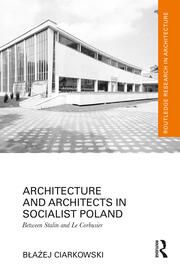
Architecture and Architects in Socialist Poland Between Stalin and Le Corbusier
List of figures
List of Abbreviations
Acknowledgements
Introduction
1. The architecture and architects in socialist Poland
1.1. Political, geographical, and historical context
1.2. Architecture of the interwar period
1.3. Six stages of development of architecture in socialist Poland
2. Artist or worker? Architect in the socialist country
2.1. Education
2.2. State-owned architectural offices
2.3. Academic career
2.4. Architects in public administration institutions
2.5. Architects-politicians
3. Iron curtain or nylon curtain?
3.1. Foreign literature and journals
3.2. Polish architects in the Western world
3.3. International architectural competitions
3.4. Polish architects in the Middle East and North Africa
4. National in form, socialist in content
4.1. Between „old” and „new” times – architecture before 1949
4.2. The architecture of „Stalinist empire style”
4.3. New cities, new estates
4.4. Post-war reconstruction of Warsaw
4.5. Western and Northern Territories
5. Back to the modernism
5.1. Architecture and modernization policy
5.2. „Prestigious developments”
5.3. (Critical) regionalism
5.4. New city centres
5.5. Housing estates
6. Post-soc-modernism
6.1. Post-socmodernism or soc-postmodernism?
6.2. Churches in the socialist state – architecture of resistance
6.3. Against the Athens Charter – postmodern urban planning
Epilogue
Appendix 1: Biographies of selected architects mentioned in the book
Index
Biography
Błażej Ciarkowski, MSc and PhD in architecture from the Łódź University of Technology and MA in the history of art from the University of Łódź, is an associate professor at the Institute of Art History, University of Łódź, and three-term winner of the scholarship of the Minister of Culture and National Heritage. He has authored numerous books and articles on modern architecture and the preservation of the modern movement’s heritage. Błażej’s research interests focus on modernist architecture, mutual relations between architecture and politics, and the preservation and conservation of modernist architecture. He is a member of Docomomo International, the Polish National Committee of International Council on Monuments and Sites (ICOMOS), the Association of Art Historians, and the Association of Polish Architects.
