





1st Edition
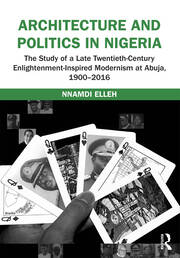
Architecture and Politics in Nigeria The Study of a Late Twentieth-Century Enlightenment-Inspired Modernism at Abuja, 1900–2016
Biography
Nnamdi Elleh, Ph.D., is Professor of Architecture at the University of Cincinnati, Ohio. His research interests include modern and contemporary architecture understood as diverse, multi-centered, regional, vernacular and localized experiences in different parts of the world.
"Elleh’s story of the development of the city of Abuja is likely to be one of the most important books on the impact of urban planning and architecture to emerge from the African continent. Set within the intrigues of colonial and post-colonial Nigerian politics, and enlivened with insights into Elleh’s own colourful experiences (as a child and later as a researcher) in Nigeria, it makes gripping reading. Significantly, however, it supports wider arguments about the role of master planning and modernist architecture in the global South (see UN Habitat’s 2009 Global Report on planning), which suggest that these approaches are frequently used to promote the interests of powerful commercial and political elites, and have very little to do with the making of locally appropriate, well-functioning and sustainable cities. Even more damning, as Elleh shows, is the complicity of international planning and architectural ‘stars’ – those global professionals concerned primarily with making their name on projects such as this one. Misguided desires by Nigerian politicians to show that they could ‘catch up with the West’ aligned with design professionals unable to think beyond 1930s Corbusian modernism, but neither offered much comfort to the many thousands evicted and displaced in the name of urban progress. Elleh is a wonderful story-teller with a real gift for explaining a complex development project in an accessible way to a wide readership." - Professor Vanessa Watson, School of Architecture, Planning and Geomatics, University of Cape Town
"Architecture and Politics in Nigeria is an accomplished piece of scholarship and a fascinating exploration of the relationship between urban design and political aspirations. Elleh has a talent for explaining and reflecting upon complex phenomena, and his book is yet another reminder we cannot conceptualize architecture autonomously from its political and social contexts." – Joseph Godlewski, S
