




1st Edition
Atlas of the Holocene Netherlands Landscape and Habitation since the Last Ice Age
96 Pages
by
Routledge
96 Pages
by
Routledge
Also available as eBook on:
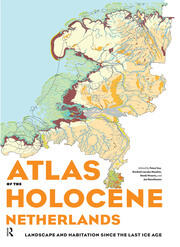
The landscape of the Netherlands has been changing constantly since the end of the last ice age, some 11,700 years ago. Where we walk today was once a polar desert, a river delta or a shallow sea. The end of the last ice age marked the beginning of a new geological period - the Holocene, the relatively warm geological epoch in which we are still living today. The Atlas of the Holocene Netherlands... Read more
Preface, Introduction, 1 The Netherlands in the Holocene 2 What came before? 3 Rising sea levels 4 Tides and waves shape the coast 5 The big rivers fill the delta 6 Peat covers the land 7 Human intervention 8 How the maps were compiled 9 Notes on the map legends The maps 9000 BCE Rising temperatures 5500 BCE Rising water levels 3850 BCE Expanding peat 2750 BCE The coastline closes 1500 BCE Peat covers the land 500 BCE The building of terps 250 BCE Changing tidal systems CE 100 Human impact CE 800 Return of the sea CE 1250 Dyking of rivers and salt marshes CE 1500 People shape the landscape CE 1850 Human 'nature' CE 2000 A country created by people, Glossary, Further reading, Acknowledgements
Biography
Peter Vos is Geologist at TNO, The Netherlands. He is author of Origin of the Dutch Coastal Landscape, 2015. Michiel van der Meulen is Chief Geologist of TNO, The Netherlands. He is author of Nieuwe Geologische kaart van het Koninkrijk der Nederlanden, 2018. Henk Weerts is senior researcher at the Dutch Cultural Heritage Agency (Rijksdienst voor het Cultureel Erfgoed). Jos Bazelmans is Head of the Department of Archaeology at the Dutch Cultural Heritage Agency (Rijksdienst voor het Cultureel Erfgoed).
