





1st Edition
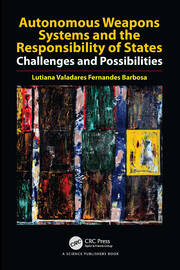
Autonomous Weapons Systems and the Responsibility of States Challenges and Possibilities
Introduction. PART I – SETTING THE GROUND FOR DISCUSSING STATE RESPONSIBILITY IN THE CONTEXT OF AUTONOMOUS WEAPONS SYSTEMS. Autonomous Weapons Systems: Concepts and Unpredictability. The Accountability Gap, the Focus on Individual Criminal Responsibility, and the Shadow of State Responsibility until 2022. PART II - INTERNATIONAL RESPONSIBILITY OF STATES AND AUTONOMOUS WEAPONS SYSTEMS: ARTICLES ON THE RESPONSIBILITY OF STATES FOR INTERNATIONALLY WRONGFUL ACTS. The Articles on the Responsibility of States for Internationally Wrongful Acts and Autonomous Weapon Systems. The Internationally Wrongful Act of a State: General Principles, Attribution, and Breach of an International Obligation. The Internationally Wrongful Act of a State: Responsibility of a State for AWS Violations in Connection with the act of another State. The Internationally Wrongful Act of a State: Force Majeure; and the Content of the International Responsibility of a State: Assurances of Non-Repetition. Autonomous Weapons Systems and Special Issues Related to Primary Norms Impacting Responsibility. PART III MIND THE GAPS: VENUES TO ENHANCE STATE RESPONSIBILITY AND ACCOUNTABILITY. Autonomous Weapons Systems: Regulative Options and Substantive Possibilities De Lege Ferenda. Issues that can be Addressed Through Tailored Attribution Rules. Issues that can be Addressed Through a Strict Liability Regime. Issues That can be Addressed Through other Autonomous Weapons Systems Specific Rules. Conclusion. Bibliography. Index.
Biography
Lutiana Valadares Fernandes Barbosa is a human rights advocate and has been a Federal Public Defender since 2010. She was a researcher for UNESCO on the implementation of the Recommendation on the Ethics of Artificial Intelligence in the Brazilian context. Lutiana has a Ph.D. in International Law from the Federal University of Minas Gerais, a Master of Laws from Columbia University (James Kent Scholar Academic Recognition), and a Master of Laws from Pontifícia Universidade Católica de Minas Gerais (cum laude). Lutiana has authored 11 Pillars for Human Rights Education and co-authored Artificial Intelligence and Human Rights (in Portuguese).
