




1st Edition
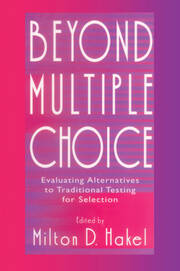
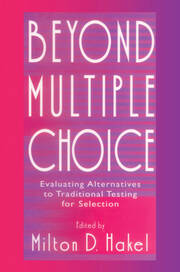
Beyond Multiple Choice Evaluating Alternatives To Traditional Testing for Selection
Edited By Milton D. Hakel
Copyright 1998
232 Pages
by
Psychology Press
230 Pages
by
Psychology Press
232 Pages
by
Psychology Press
Also available as eBook on:
This volume provides in-depth coverage of a key piece of today's human resource selection technology--the viability of alternatives to paper and pencil multiple-choice selection tests. Each chapter of this edited volume presents an intensive examination of a key "alternative to multiple-choice testing." The content of the book's chapters ranges from reviews of issues associated with, and evidence... Read more
Contents: Preface. M.D. Hakel, Into the Great Beyond. R.M. Guion, Jumping the Gun at the Starting Gate: When Fads Become Trends, and Trends Become Traditions. M.L. Tenopyr, Measure Me Not: The Test Taker's New Bill of Rights. J.R. McBride, Innovations in Computer-Based Ability Testing: Promise, Problems, and Perils. J.L. Outtz, Testing Medium, Validity, and Test Performance. S.J. Messick, Alternative Modes of Assessment, Uniform Standards of Validity. M.D. Mumford, W.A. Baughman, E.P. Supinski, L.E. Anderson, A Construct Approach to Skill Assessment: Procedures for Assessing Complex Cognitive Skills. P.R. Sackett, Performance Assessment in Education and Professional Certification: Lessons for Personnel Selection? L. Hough, Personality at Work: Issues and Evidence. N. Schmitt, E.D. Pulakos, Biodata and Differential Prediction: Some Reservations. A.M. Ryan, G.J. Greguras, Life Is Not Multiple Choice: Reactions to the Alternatives. D.J. Kleinke, A Practitioner's Response and Call for Help. M.D. Hakel, Been There, Done That!
Biography
Hakel, Milton D.
"...a valuable resource for anyone wanting an objective evaluation of multiple choice testing, and its alternatives. It is recommended reading for anyone interested in the topic, including those who feel that the alternatives are to be preferred."
—Personnel Psychology"...the substantial papers on attempts to assess complex skills provide instructive models for those attempting such developments."
—Assessment in Education
