




1st Edition
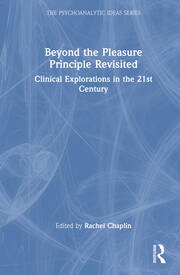
Beyond the Pleasure Principle Revisited Clinical Explorations in the 21st Century
Preface
Acknowledgements
Notes on Contributors
Disclaimer
Introduction by Rosine Perelberg Beyond the Pleasure Principle: the Repetition Compulsion and Sexuality
Part One: The death drive, or not?
Michael Feldman Some views on the Manifestation of the Death Drive in clinical work
Christine English Still Life: Vicissitudes of the Death Drive in the Analysis of a male patient
Michael Parsons The Death Drive: not a drive, not about death, but a retreat from complexity
Part Two: The Play of the Drives
E.B. Martin Fort/ Da: the play of the drives in clinical work
Anna Streeruwitz Before the Pleasure Principle
Kate Pugh Beyond the Pleasure Principle and Bion’s Epistemophilic Instinct
Josh Cohen Affect and the ‘slow’ drive: a metapsychology of anger
Epilogue: Freud’s letter to the future
Rachel Chaplin It’s not a sin to fly: Beyond the Pleasure Principle and the radical imagination
Index
Biography
Rachel Chaplin is a training and supervising analyst of the British Psychoanalytical Society and Honorary Associate Professor at University College London.
Re-reading this pivotal text on the complexities of repetition, action and the drives, the speculative brilliance of which announces and inaugurates Freud’s late work, the authors in Rachel Chaplin’s timely edited collection rise to the occasion. The book recommends itself above all as a contribution to clinical thinking, demonstrating with vivid case material the extent to which the dialectic of aliveness and deadness has moved centre stage. Chapter by chapter, the theatre of analysis and the dramaturgy of the drives are variously animated by what Chaplin aptly describes as the “radical imagination” of the Freudian scene of writing.
-Steven Groarke, Professor emeritus at Roehampton University, London, and a member of the British Psychoanalytical Society.
In Beyond the Pleasure Principle Freud sought to develop a theoretical framework that he hoped would facilitate better understanding of the most intractable clinical problems. More than a century later, this lovingly curated collection of contributions by analysts of the British Psychoanalytic Society testifies to the liveliness of the ongoing dialogue about the most challenging aspects of psychoanalytic work. Far more than the sum of its parts thanks to Rachel Chaplin’s masterly editing, this book superbly demonstrates how returning to Freud can invigorate psychoanalytic thinking.
-Elizabeth Allison, Lecturer at the University College London, Clinical, Education & Health Psychology
