




1st Edition
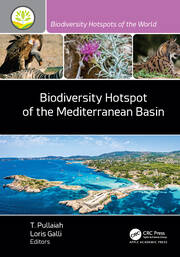
Biodiversity Hotspot of the Mediterranean Basin
1. Introduction
Loris Galli and Thammineni Pullaiah
2. Biodiversity and Preservation Issues of the Genus Tuber in the Mediterranean Basin
Di Piazza Simone, Donnini Domizia, Iotti Mirco, Leonardi Marco, Zambonelli Alessandra, and Zotti Mirca
3. Mediterranean Lichens
Paolo Giordani
4. A Look at the Vascular Flora of the Mediterranean Hotspot
Mauro Mariotti
5. Rotifera Diversity of the Mediterranean Hotspot
Diego Fontaneto
6. Soil Arthropods Diversity
Loris Galli, Erhard Christian, Giulio Gardini, Cristina Menta, Andy Murray, and Sara Remelli
7. The Terrestrial Isopods (Crustacea, Isopoda, Oniscidea) of the Mediterranean Basin Biodiversity Hotspot: An Overview
Pietro Gardini
8. Centipedes (Chilopoda) in the Mediterranean Region: Species Diversity, Distribution Patterns, Taxocoenosis, and Conservation
Marzio Zapparoli
9. Odonata Diversity of the Mediterranean Hotspot
Matteo Zinni
10. Orthoptera Diversity in Mediterranean-Macaronesian Biodiversity Hotspot
Bruno Massa
11. The Pear-Shaped Weevil Fauna in the Mediterranean Hotspot (Coleoptera, Apionidae)
Carlo Giusto
12. Apoidea (Hymenoptera) and Other Pollinators of the Mediterranean Basin
Claudio Bellantuoni
13. Diversity of Mediterranean Freshwater Fishes, With Special Reference to the Italian Peninsula
Massimo Lorenzoni and Antonella Carosi
14. Amphibian Diversity of the Mediterranean Hotspot
Roberto Sindaco and Alberto Venchi
15. Reptile Diversity of the Mediterranean Hotspot
Roberto Sindaco and Alberto Venchi
16. Status of Avian Diversity in the Mediterranean
Giancarlo Fracasso and Nicola Baccetti
17. Non-Volant Mammals in the Mediterranean Hotspot
Paolo Colangelo, Riccardo Castiglia, and Giovanni Amori
Biography
T. Pullaiah, PhD, is a former Professor at the Department of Botany at Sri Krishnadevaraya University in Andhra Pradesh, India, where he has taught for more than 35 years. He has held several positions at the university, including Dean, Faculty of Biosciences; Head of the Department of Botany; Head of the Department of Biotechnology; and member of Academic Senate. He was President of the Indian Botanical Society (2014), President of the Indian Association for Angiosperm Taxonomy (2013), and Fellow of Andhra Pradesh Akademi of Sciences. He was awarded the Panchanan Maheshwari Gold Medal, the Prof. P. C. Trivedi Medal, the Dr. G. Panigrahi Memorial Lecture Award from the Indian Botanical Society; a Prof. Y. D. Tyagi Gold Medal from the Indian Association for Angiosperm Taxonomy; and a Best Teacher Award from the Government of Andhra Pradesh. Under his guidance, over 50 students earned their doctoral degrees. He has authored 65 books, edited 45 books, and published over 340 research papers. He was a member of the Species Survival Commission of the International Union for Conservation of Nature (IUCN). Professor Pullaiah received his PhD from Andhra University, India, attended Moscow State University, Russia, and worked as Postdoctoral Fellow during 1976–1978.
Loris Galli, PhD, is a Senior Researcher and Professor of Zoology at the Department of Earth, Environmental and Life Sciences of the University of Genoa, Italy, where he teaches Evolutionary Zoology and Population Biology. He is currently a National Counselor of the Italian Entomological Society (SEI) and member of Working Group 1 (Measurement, Assessment and Monitoring of Soil Biodiversity) of the FAO International Network on Soil Biodiversity (NETSOB). In addition, he is editor-in-chief of the Bulletin of Environmental and Life Sciences, assistant editor of the Bulletin of the Italian Entomological Society, and editor of Biogeographia: The Journal of Integrative Biogeography. His research initially focused on the monitoring, conservation, and management of avifauna, especially in relation to the effects of human activities such as hunting and the design of new structures (wind towers), but also in relation to the impact of some bird species on human activities (agricultural crops, urban hygiene, bird-strike risks in airport areas). However, for years now he has mainly dealt with soil arthropods and their importance as indicators of environmental quality (within the QBS-ar Index). In particular he specialized in the study of the systematics, ecology, and distribution of Protura. He is the author of dozens of articles in national and international journals on entomological and ornithological topics and one of the authors of the Global Soil Biodiversity Atlas (European Commission, 2016). He has taken part in several “third mission” initiatives aimed at promoting knowledge about animal biodiversity, and in this context he has published as main author or co-author of some popular monographs on fauna in Italy, in Liguria, or in more limited areas. Dr. Galli graduated from the University of Genoa with a master degree in Ornithology and a PhD in Evolutionary Biology and Biodiversity Conservation at the University of Turin with a doctoral thesis in population genetics.
