




1st Edition
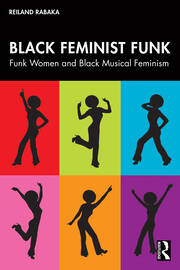
Black Feminist Funk Funk Women and Black Musical Feminism
Introduction to Black Feminist Funk 1. The Black Women's Liberation Movement and Black Political Feminism 2. The Black Feminist Funk Movement and Black Musical Feminisn 3. "We Were a Musical Movement": Labelle's Embryonic Black Feminist Funk Rock and the Emergence of the Black Feminist Funk Movement 4. "I've Always Seen Myself as a Healer, with My Songs, With My Singing": Chaka Khan's Soulful Sensual Therapeutic Funk and the Black Feminist Funk Movement 5. "The Music is Physical and It's About Sex": Betty Davis's Ultra-Erotic Funk Rock, the Sexual Revolution of the 1970s, and the Black Feminist Funk Movement Conclusion—Black Feminist Neo-Funk
Biography
Reiland Rabaka is Professor of African, African American, and Caribbean Studies in the Department of Ethnic Studies and the Founder and Director of the Center for African & African American Studies at the University of Colorado Boulder.
Funk and feminism are rarely mentioned in the same breath. Maybe Reiland Rabaka’s Black Feminist Funk will change that! By foregrounding some of the period’s most artistically daring Black women musicians, Rabaka reveals that culture and politics, music and feminism came together in the funk of the 1970s. Rabaka’s tight focus on Chaka Khan, Betty Davis, and the women of Labelle, pays off, allowing readers to appreciate their contributions to the invention and evolution of funk and to the articulation of Black feminism.
- Alice Echols, Author of Hot Stuff: Disco and the Remaking of American Culture
Professor Rabaka’s passion for uncovering the overlooked roles of Black women who shaped Funk shines through once again! It is his attention to subtle yet powerful details that makes this book stand out. You will “hear” these women’s voices as they speak and sing through its pages, and you will “see” them perform. Rabaka does more than center them—he allows them to speak and perform through his writing. This is another liberatory text that reveals how Black women voice their lived musical experiences through funk.
- Ruth Opara, Department of Music, Columbia University, New York
A daring and powerful work that rectifies the all too common erasure of Black women from feminist musicology, Reiland Rabaka’s testament of Black musical feminism provides an illuminating cultural context for Black women’s funk, highlighting the critiques of patriarchy, capitalism, and sexism behind the beats, and how feminine funksters addressed sexual liberation, Black power, and calls for economic justice three minutes at a time.
- Roberta Freund Schwartz, Director of the Musicology Division, School of Music, University of Kansas
