




1st Edition
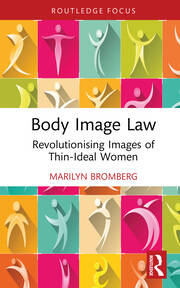
Body Image Law Revolutionising Images of Thin-Ideal Women
1. Introduction
2. Body Image and Eating Disorders Generally and Associated Socioeconomic Issues
3. Theories to Explain the Connection Between Seeing Images of the Thin-Ideal and Developing Poor Body Image and Eating Disorders
4. How Social Media Impacts Body Image
5. Body Image Law: A Detailed Examination
6. Challenges Associated With Body Image Law
7. Pro-Anorexia Websites/Social Media and the Law
8. What Might Work to Help Improve Body Image and Ways to Lower the Number of Unhelpful Images of the Thin-Ideal, Based on Evidence
9. Conclusion
Biography
Marilyn Bromberg, FHEA ('M'), is a mother and a dual Canadian and Australian citizen. She is an Associate Professor at the University of Western Australia and a practising lawyer. M was a visiting scholar at STRIPED at the T.H. Chan School of Public Health at Harvard University/Boston Children's Hospital. M has the following qualifications: PhD, LLB (Dist), BBA (Hon), Grad Cert Pop Health Studies and Grad Cert University Teaching. She also plays piano, takes singing lessons and loves being outside. M has a great passion to try to help people who have poor body image and eating disorders using research and advocacy.
Although the causes of eating disorders are complex, there is no doubt that society’s overvaluation of thinness plays a major role. This book provides an important perspective: the burden of challenging unrealistically thin body ideals should not fall solely on the individual and the government has a responsibility to protect the public from harmful images. The author is clearly passionate about the topic and takes the reader through the history, successes, and pitfalls of international law and policy designed to ensure that the mass media do not glorify being underweight. Extremely well researched and eye-opening, this book is a fascinating read.
Jennifer Mills, Psychologist and Professor, York University
This highly readable book is the first to present a comprehensive analysis of Body Image Law and proposed but unsuccessful law designed to reduce exposure to thin ideal images, including from Israel, France, Norway, US, UK and Brazil. It also provides a unique review of legislation and self-regulation into related areas such as on-line safety and pro-ana websites. A key feature of this work is a balanced critique of research into different approaches and examination of the effectiveness of legislation through the lens of evidence. This paves the way for a fascinating look into future legislative possibilities.
Susan Paxton, Emeritus Professor, La Trobe University
In this book, Bromberg brings together detailed reviews of current Body Image Law worldwide and the evidence for effectiveness of these laws on improving mental health and outcomes. Despite lack of definitive evidence, the book ends on a hopeful note. Bromberg also points to the alarming increase in the use of artificial intelligence to produce images and highlights the rapidly changing landscape and the likely need for flexible and time-responsive future actions. This book resonates and speaks to all, i.e. scholars, health care providers, policy and law makers and most of all to people experiencing unhelpful body image pressures.
Phillipa Hay, Professor and Chair of Mental Health, Western Sydney University
Dr Bromberg’s pioneering book not only documents international legislative measures and policy initiatives, but also engages in a critical evaluation of their effectiveness. Particularly noteworthy is its nuanced exploration of the interrelated roles of media, prevailing social norms, and industry practices in shaping body image and influencing the prevalence of eating disorders. It draws on doctrinal analysis, empirical evidence, and international comparative perspectives, which is further enriched by valuable annexures. This scholarly and multidimensional approach ensures that the work will be an indispensable resource for academics, policymakers, and practitioners in the fields of public health, media studies, and related disciplines.
Vagia Polyzoidou, Associate Professor, University of Nicosia School of Law
Bromberg’s primer on Body Image Law is an essential read for 2025 – and for anyone working in the broad sphere of online harms. It captures a breadth of law and policy discussions and offers real food for thought without seeking to advocate for distinct policy change in a rapidly evolving area. Importantly, it is written – deliberately – in an accessible manner. This will undoubtedly trigger conversations – conversations that we should all be having. This book marks a line in the sand from which we start those conversations.
Kim Barker, Professor, University of Lincoln Law School
