




1st Edition
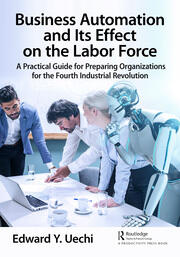
Business Automation and Its Effect on the Labor Force A Practical Guide for Preparing Organizations for the Fourth Industrial Revolution
Chapter 1: Cost and Use of Resources
Chapter Summary
Operations and Resources
Equipment and Labor: The Production Equation
An All-Human Labor Force
An All-Machine Equipment Force
A Mix Labor-Equipment Force
Chapter 2: Technological Development
Chapter Summary
The Computer
The Computer and the Internet
The Computer and Mechanical Devices
The Computer and New Materials
The Computer and the Human Body
Computing Methods of Data Analysis
Artificial Intelligence (AI)
Quantum Computer
Misconceptions of Emerging Technologies
Candidates for Business Automation
Chapter 3: Automation in Agriculture
Chapter Summary
Description of the Industry
Demand for Human Workers
Technological Systems in the Past
Technological Systems in the Future
Forecasting of Technological Systems
Changes in Jobs, Roles, and Occupations
Chapter 4: Automation in Manufacturing
Chapter Summary
Description of the Industry
Demand for Human Workers
Technological Systems in the Past
Technological Systems in the Future
Forecasting of Technological Systems
Changes in Jobs, Roles, and Occupations
Chapter 5: Automation in Construction
Chapter Summary
Description of the Industry
Demand for Human Workers
Technological Systems in the Past
Technological Systems in the Future
Forecasting of Technological Systems
Changes in Jobs, Roles, and Occupations
Chapter 6: Automation in Transportation and Warehousing
Chapter Summary
Description of the Industry
Demand for Human Workers
Technological Systems in the Past
Technological Systems in the Future
Forecasting of Technological Systems
Changes in Jobs, Roles, and Occupations
Chapter 7: Automation in Accommodation and Food Services
Chapter Summary
Description of the Industry
Demand for Human Workers
Technological Systems in the Past
Technological Systems in the Future
Forecasting of Technological Systems
Changes in Jobs, Roles, and Occupations
Chapter 8: Automation in Health Care
Chapter Summary
Description of the Industry
Demand for Human Workers
Technological Systems in the Past
Technological Systems in the Future
Forecasting of Technological Systems
Changes in Jobs, Roles, and Occupations
Chapter 9: Automation in Administrative and Support
Chapter Summary
Description of the Industry
Demand for Human Workers
Technological Systems in the Past
Technological Systems in the Future
Occupations Affected and Unaffected
Chapter 10: Automation in Educational Services
Chapter Summary
Description of the Industry
Demand for Human Workers
Technological Systems in the Past
Technological Systems in the Future
Forecasting of Technological Systems
Changes in Jobs, Roles, and Occupations
Chapter 11: Widespread Automation Across the Economy
Chapter Summary
Similarities of Future Technological Systems
Notable Developments in Future Technological Systems
Timeline for Automating Industry Sectors
Leading Industry Sectors
Lagging Industry Sectors
Conclusion of Business Automation Across All 8 Industry Sectors
Chapter 12: Automation’s Effect on the Labor Force
Chapter Summary
Aggregation of Lost Jobs
Aggregation of New Jobs
Differences in Skills and Abilities
Equipment and Labor: The Production Equation Revisited
Implications for the Labor Force
Next Steps for Future Study
Endnotes
Bibliography
Index
Biography
Over a 25-year professional career, Edward Y. Uechi has helped people in the United States and other countries to use information technology (IT) to their advantage. After establishing his expertise in the IT field at a high-technology international corporation in Silicon Valley, he has provided training and technical assistance to government agencies and private companies. He currently works at the U.S. Department of Labor. Edward earned a Master of Public Administration degree from the Maxwell School of Syracuse University. He is the author of Public Service Information Technology: The Definitive Manager’s Guide to Harnessing Technology for Cost-Effective Operations and Services (Routledge/Productivity Press, 2020).
"A terrific book that provides tremendous insight"
Darrell M. West, Brookings Institution"The extent of Uechi’s research is genuinely impressive. A sweeping and authoritative look at the future of the tech-work connection." —Kirkus Reviews
Full Review: https://www.kirkusreviews.com/book-reviews/edward-uechi/business-automation-and-its-effect-on-the-labor-fo/". . . welcome clarity, insight, and organizational coherence. The conclusions are persuasive, and the advice clear." —Publishers Weekly "Book Life"
Full Review: https://booklife.com/booklife-review/9781032038346
