



1st Edition
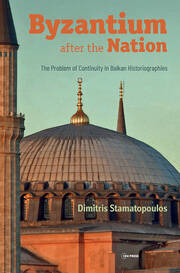
Byzantium after the Nation The Problem of Continuity in Balkan Historiographies
By Dimitris Stamatopoulos
Copyright 2023
410 Pages
by
Central European University Press
Stamatopoulos undertakes the first systematic comparison of the dominant ethnic historiographic models and divergences elaborated by Greek, Bulgarian, Serbian, Albanian, Romanian, Turkish, and Russian intellectuals with reference to the ambiguous inheritance of Byzantium. The title alludes to the seminal work of Nicolae Iorga in the 1930s, Byzantium after Byzantium, that argued... Read more
CHAPTER I. Introduction 1. The Discipline of History: Canons and Divergences 2. The Problem of Continuity: Theories of Origin and Political Imperatives 3. In the Shadow of the Empire 4. Describing the Network: The Ottoman Framework and its CollapseCHAPTER II. The Iconoclast Byzantium of Greek Nationalism 1. Manuel Gedeon's Perception of History 2. A Periodization 3. Zambelios's Transcendant Byzantium: From Aristotle to Hegel 4. Paparrigopoulos's Phanariot Byzantium and French Imperial Nationalism 5. France and Russia in Constantinople: Toward an Interpretation of the Great Idea 6. Helleno-Ottomanism: The Response of Constantinople 7. Heretical Byzantium in The History of the Greek Nation 8. Iconoclasm as a Conspiracy of the Monarchy 9. Iconoclasm as Reformation 10. Gedeon's Medieval HellemismHellenism: The Zambelios-Paparrigopoulos Construct Scheme and the Ottoman Divergence 11. Footnotes: The Denunciation of Helleno-Orthodoxy 12. Byzantium as a Metaphor: Greeks and Slavs 13. The Iconoclast Byzantium and the Break from Greek Historiography 14. Byzantium as a Metonymy: The Church and the Ottoman State 15. Ecumenism as a Romantic Reconstruction 16. Histories of the Ottoman Empire CHAPTER III. The Medieval Antiquity of the Bulgarian Historiography 1. The Canon of Bulgarian Historiography: the Origin Model 2. Bulgarians: Vandals, Illyrians, or Macedonians? 3. Drinov's History: The Slavicisation of the Bulgarians 4. Krâstevi?'s Thesis: The Bulgarians are Huns (The Positive Use of Byzantine Chronography) 5. Drinov's Thesis: The Bulgarians are Slavs (The Negative Use of Byzantine Chronography) 6. Krâstevi?'s Response: The Huns are Slavs 7. The Romantic Reconstruction of Imperial Discourse: Some Conclusions 8. Povestnost Instead of Historija: Georgi Rakovski's Hyper-Hermeneutic Model 9. The Balkans as East: Charilaos Dimopoulos' History of the Bulgarians CHAPTER IV. Byzantinisms and the Third Rome: Russian Imperial Nationalism 1. Konstantin Leont'ev: On the Edge of Two Epistemological Paradigmes 2. Leont'ev's Byzantism 3. The Middle Ages as a Canonical Model 4. Byzantism as Imperial Discourse: The Parity of Russians and Ottomans 5. Leont'ev's Slavism: Greeks/Bulgarians, Germans/Czechs 6. The Three Romes 7. A Romantic Reconstruction of History: the Persians' Vindication 8. Leont'ev and Marko Balabanov: Byzantism as a Bridge 9. The Meaning of Progress and the Possibility of an Ottoman Nation 10. Byzantium and the Groundless Accusation of Ethno-Phyletism 11. Balabanov and Renan: Balkans Will Turn into a Volcano 12. Byzantium and Great Idea: The Serbian Perspective 13. Ivan I. Sokolov's Byzantinism 14. Pan-Orthodox Ecumenism and Byzantinisms: Gedeon's Two Moments CHAPTER V. The Roman Byzantium of the Albanian Historiography 1. Nam?k Kemal and Renan 2. The Rupture of Pan-Islamic Ecumenism: Şemseddin vs. Sami Frashëri 3. Between Ancient Greeks and Modern Europeans: Islamic Civilization as a Mediator 4. The De-Arabification of Islam 5. The Management of Time and Space in Islam 6. From the Islamic Ummah to the Albanian Nation: The Return of the Pelasgians 7. The Problem of Discontinuity in Albanian History 8. Konstantinos Paparrigopoulos and the Pelasgians 9. The De-Islamification of Albanian History 10. Pan-Islamic Ecumenism and Roman Byzantium: The Immanence of Empire CHAPTER VI. Byzantium as ....
Biography
Jernej Mlekuž is Research Fellow at the Slovenian Migration Institute at the Research Centre of the Slovenian Academy of Sciences and Arts.
