





Foreword
A Goddess Goes to War: Claiming the Right to Modesty An Introduction to the Odia Legend of Chandi
1. Prayer to Sri Ganesh
2. Prayer to Goddess Sarala
3. Mahisasura’s Meditation
4. Mahisasura’s Conquest of Kurancheka
5. Mahisasura’s Battle with Merusula
6. Dhumralochana Ordained as a Charioteer
7. Mahisasura Concedes Defeat to Chanda and Munda
8. Mahisasura’s Marriage with Chandrabati
9. Mahisasura’s Conquest of Jambu Island
10. Mahisasura’s Battle with Shumbha and Nishumbha
11. Mahisasura Loses the Battle
12. Mahisasura’s Letter to Indra
13. Durga’s Stay at Ratnagiri
14. Mahisasura Informed of Durga’s Arrival
15. The Killing of Chanda and Munda
16. The Killing of Shumbha and Nishumbha
17. The Killing of Chamara and Bemala
18. The Killing of Kantimala, Raktabirjya, Biraghanta, Kaladanda and Bidulaksha
19. The Tale of Bailochana
20. The Demon Commanders Challenge Durga
21. Mahisasura Proceeds to the Battlefield
22. The Killing of Kalabimochana
23. The Killing of Mahisasura
Biography
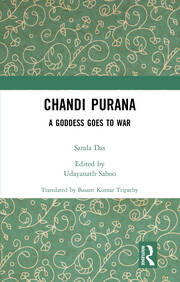
Sarala Das (15th century) A shudra by caste and a farmer by occupation, Sarala Das was a great devotee of Sarala Chandi whom he considered his mother and his guide throughout his literary career. The poet of common man, he wrote epics such as the Bichitra Ramayana, the Mahabharata, and the Chandi Purana which immortalized him.
Udayanath Sahoo is the Chair Professor of Adikabi Sarala Das Chair of Odia Studies at Centre of Indian Languages, Jawaharlal Nehru University, New Delhi having 40 years of teaching and Research experience.
Basant Kumar Tripathy is a poet and translator. He has co-translated Phakirmohan’s Atmacharita and Lachhama. Some of his other translations are: Tika Gobindachandra, Mathura Mangala and Bichitra Ramayana.
Urmishree Bedamatta teaches English language and literature at Ravenshaw University, Cuttack, Odisha. For research, she engages mostly with Odia texts and manuscripts with a focus on the needs of the twenty-first century reader.
