
1st Edition

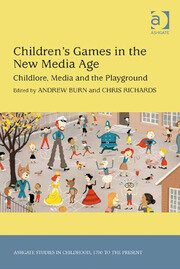
Children's Games in the New Media Age Childlore, Media and the Playground

Edited By Chris Richards, Andrew Burn Copyright 2014
238 Pages
by Routledge

238 Pages
by Routledge

238 Pages
by Routledge

The result of a unique research project exploring the relationship between children's vernacular play cultures and their media-based play, this collection challenges two popular misconceptions about children's play: that it is depleted or even dying out and that it is threatened by contemporary media such as television and computer games. A key element in the research was the digitization and... Read more
Contents: Children’s playground games in the new media age, Andrew Burn; The Opie recordings: what’s left to be heard?, Laura Jopson, Andrew Burn and Jonathan Robinson; ’That’s how the whole hand-clap thing passes on’: online/offline transmission and multimodal variation in a children’s clapping game, Julia C. Bishop; Rough play, play fighting and surveillance: school playgrounds as sites of dissonance, controversy and fun, Chris Richards; The relationship between online and offline play: friendship and exclusion, Jackie Marsh; Remixing children’s cultures: media-referenced play on the playground, Rebekah Willett; The game catcher: a computer game and research tool for embodied movement, Grethe Mitchell; Co-curating children’s play cultures, John Potter; Postscript: the people in the playground, Chris Richards and Andrew Burn; Index.

Biography

Andrew Burnis a Professor in the Department of Culture, Communication and Media at the Institute of Education, University of London. Chris Richards, also of the Department of Culture, Communication and Media, has recently retired.

The essays in Andrew Burn and Chris Richards’s volume, Children’s Games in the New Media Age: Childlore, Media and the Playground, are concerned on the whole with the ways that popular media references move across what they call traditional playground games. In addition to arguing that relationships between media and play are complex, they demonstrate that traditional games are far more robust than often acknowledged. - Jennesia Pedri, Jeunesse
