





1st Edition
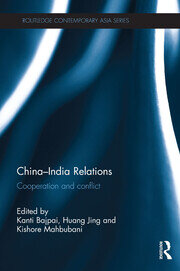
China–India Relations Cooperation and conflict
Introduction: The Long Peace, New Areas of Competition, and Opportunities for Cooperation in China-India Relations Kanti Bajpai, Huang Jing, and Kishore Mahbubani Part I: Economics 1. Convergence and Divergence in Development – An Indian Perspective Prem Shankar Jha 2. Towards Greater Financial Cooperation – A Chinese Perspective Zhao Gancheng 3. Bilateral Trade and Global Economy – An Indian Perspective Sanjaya Baru 4. Competitive Cooperation in Trade – A Chinese Perspective Hu Shisheng Part II: Environment and Energy 5. Working Together Towards an Ecologically Civilised World – A Chinese Perspective Pan Jiahua 6. Cooperation on Climate Change Mitigation – An Indian Perspective Arabinda Mishra and Neha Pahuja 7. Sino-Indian Interactions in Energy in the 2000s – A Chinese Perspective Zha Daojiong 8. What Scope for Resource Cooperation? – An Indian Perspective Arunabha Ghosh Part III: Water 9. Towards Riparian Rationality – An Indian Perspective Uttam Kumar Sinha 10. A River Flows Through It – A Chinese Perspective Selina Ho Conclusion: Ways Forward for China-India Cooperation Kanti Bajpai, Huang Jing, and Kishore Mahbubani
Biography
Kanti Bajpai is Wilmar Professor of Asian Studies at the Lee Kuan Yew School of Public Policy, National University of Singapore.
Huang Jing is Lee Foundation Professor on US–China Relations and Director of the Centre on Asia and Globalisation at the Lee Kuan Yew School of Public Policy, National University of Singapore.
Kishore Mahbubani is Dean and Professor of Practice at the Lee Kuan Yew School of Public Policy, National University of Singapore.
