




1st Edition
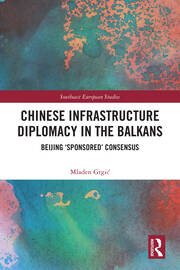
Chinese Infrastructure Diplomacy in the Balkans Beijing ‘Sponsored’ Consensus
Introduction
PART I The Chinese Great Transformation
1 China’s Path to Technological and Economic Power
Infrastructure Drive and Global Expansion
Towards a Service and High-Tech-Oriented Economy
Rising Global Influence and Political Shifts
PART II Chinese Regional Strategies in Europe: Introduction
2 16+1 Initiative –Institutionalisation of China–CEE Relations
The 16+1 Summits
The Bucharest Summit (2013)
The Belgrade Summit (2014)
The Suzhou Summit (2015)
The Riga Summit (2016)
The Budapest Summit (2017)
The Sofia Summit (2018)
The Dubrovnik Summit (2019)
The Collapse of the Initiative?
The Institutional Framework of the 16+1 Initiative
A Multilateral Platform for Bilateral Affairs
The EU and 16+1
3 Belt and Road (BRI) Initiative
Europe and the Belt and Road: Between Engagement and Strategic Caution
The Balkan Silk Road: China’s Gateway into Europe
Investments in Infrastructure through BRI in the Western Balkans
Trade and Investments – Nothing New on the Eastern Front
Trade – Failed Goals
FDI – Unfulfilled Hopes
PART III China’s Infrastructure Diplomacy in Central and Eastern Europe
4 The COVEC Affair – The A2 Highway Project in Poland
The Perfect Match
An Inevitable Failure
Consequences and Lessons
5 The “Chinese Bridge” in Belgrade
Destined Partnership
A Success Story
From Infrastructure to Politics
The Weight of Corruption
6 COSCO’s Acquisition of the Port of Piraeus
Crossing the River by Touching the Stones
Financial Crisis as an Opportunity
The Strategic Impact of COSCO’s Acquisition of Piraeus
7 Belgrade– Budapest Railway
Multilateral Project
Infrastructure Commitments and Strategic Alignments
Financial and Geopolitical Implications
Delays, Transparency Issues, and EU Scrutiny
Political Significance and Economic Implications
China’s Role and Political Dynamics
8 The Pelješac Bridge – EU Funds for Chinese Companies
Connecting the Nation
An Unexpected Bidder
Local Project, Continental Impact
Decade- Long Journey – A Trojan Horse for Europe?
PART IV The Case Study of Montenegro
9 Relations between Montenegro and China
Relations between Montenegro and China
Distant Friends
New Beginning: Loans for Ships
10 The Highway Deal
A Long Dream
The (Pre)Feasibility Study: Politics Over Planning
Habemus Contractor
Political Spectacle and Overlooked Challenges
Political Pressure and the Search for Alternatives
China at the End of the Tunnel
Direct Negotiations and the Role of the 16+ 1 Initiative
The Contract with CCCC/CRBC
Controversial Tax and Fee Exemptions
The Loan Arrangement
Loan Terms
Sovereign Guarantees and Legal Jurisdiction
11 Controversies Surrounding the Project
Avoidance of Public Tender Procedure
State Guarantees
Lack of Transparency
Environmental Problems
Public Debt
The Burden of Building Big
Additional Works
Construction Delayed
12 Internal Political Implications
Change of Government and Internationalisation of the “Loan Issue”
Loan Trap Demystification
Foreign Policy Perspective
PART V Broader Implications and Future Scenarios
13 Beijing-Sponsored Consensus
Continuity Behind Change: Elite Power and Informal Governance in Post- Transition Montenegro
European Reactions to Chinese Expansion
Autocracy and Governance: An Imported Model or Local Echo?
A Beijing- Sponsored Consensus?
The Limits of Expansion: China’s Selective Reach in a Fragmenting Europe
Conclusion
What Is There in the Future for China in the Region?
Policy Recommendations
Institutional Strengthening
Rule of Law as a Pillar of Sovereignty
Towards a New Economic Model
Strategic Use of International Partnerships and Expertise
Infrastructure and Sustainability
Deepened Engagement with the European Union
A Balanced and Principled Foreign Policy
Democracy as Strategic Capital
Biography
Mladen Grgić is Teaching Assistant at the University of Montenegro, Faculty of Political Science. He holds a PhD in international political economy from Pompeu Fabra University, Faculty of Law, in Barcelona, and previously earned master’s degrees from the University of Bologna and the Catholic University of the Sacred Heart in Milan.
He has served as an Economic Affairs and Economic Diplomacy Advisor to the President of Montenegro and as Director of the Montenegrin Investment Agency, as well as in other executive roles within the private sector. As a Fulbright researcher, he studied Chinese foreign policy and economy at the University of California, Berkeley. As a recipient of the Chinese Government Scholarship, he conducted research at Xiamen University in China, focusing on international relations and development models in Asia. He was also awarded a state scholarship from the Italian Government for his master’s studies.
