
1st Edition

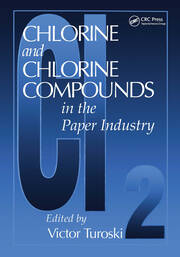
Chlorine and Chlorine Compounds in the Paper Industry

By Victor Turoski Copyright 1997
400 Pages
by CRC Press

400 Pages
by CRC Press

This handbook provides essential information on toxicology, risk assessment, analysis, monitoring, human and ecological effects, treatment alternatives, ecosystem health, compliance, and much more.

Preface Keynote Address Part 1 Current and Proposed Bleaching Alternatives Chapter 1 The Revolution in Bleached Chemical Pulp Manufacturing Technology Chapter 2 Closing Up the Bleach Plant: Striving for a Minimum-Impact Mill, Chapter 3 Overview of Ozone Bleaching Part 2 Analytical and Environmental Aspects Chapter 4 An Overview of NPDES Compliance Monitoring Methods for the Pulp and Paper Industry Chapter 5 Experiences with Isotopic Dilution Measurements of Chlorinated Phenolics Using EPA 1653 Chapter 6 Effect of Breakthrough on AOX Measurements Chapter 7 The Natural Production of Organochlorine Compounds Chapter 8 Environmental Fate of Originated Organochloro Compounds from Pulp Mills Chapter 9 Effect of Biological Treatment on Pulp Mill Effluent Chemical Characteristics Chapter 10 An Environmental Assessment Before and After Conversion of a Bleached Kraft Mill to Elemental Chlorine-Free Bleaching Chapter 11 Assessing the Aquatic Environmental Impact of ECF and TCF Pulping Operations Using Multispecies Mesocosms and Fish Biomarker Tests Chapter 12 Summary of Progress of the United States Pulp and Paper Industry in Reducing the TCDD and TCDF Content of Effluents, Pulps, and Sludges Part 3 Public Perceptions Chapter 13 Chlorine: The Issue, the Reality, and the Solution Chapter 14 Alternative Disinfectants for Drinking Water Chapter 15 Cost-Benefit Analysis of Proposed Pulp and Paper Chlorinated Organic Discharge Standards Chapter 16 Establishing Safety for Paper Products Chapter 17 Dioxin: The Magnitude of the Threat from Normal Daily Exposure Chapter 18 Chlorinated Organics- Sorting Reality from Myth in Maine and Beyond Part 4 Regulatory Aspects Chapter 19 Common Sense and Chlorine in the Paper Industry Chapter 20 Assuring the Environmental Safety of Kraft Pulp Bleaching: A Cost-Benefit Analysis Chapter 21 A Comparison of Chlorinated Organic Material Produced by Chlorine and Chlorine Dioxide Bleaching of Kraft Pulp Chapter 22 Reconciling the Collision of Visions: The Cluster Rules Part 5 Toxicology and Mechanisms Chapter 23 Toxicology and Regulatory Aspects of Chlorine and Chloroorganic Compounds Chapter 24 Removal of Persistent Toxic Bioaccumulative Chemicals from Pulp and Paper Mill Effluent Streams: Implications for Fish Advisories Chapter 25 The Effect of Chlorine and Chlorine Dioxide on Microbial Populations in Drinking Water Chapter 26 Immunotoxicity of Dioxin: Is the TEF Concept Premature Chapter 27 A Mechanistic Approach to Assessing Cancer Risks of Chloroform, Chapter 28 Environmental Endocrine Modulators and the DES Paradigm Chapter 29 EPA's Dioxin Reassessment: A Bad Example for Chlorine Compounds

Biography

Victor Turoski is a graduate of Wilkes University, Wilkes-Barre, Pennsylvania, and has pursued a career in analytical chemistry at both Carter Wallace and the American Can Company. Turoski presently manages the Corporate Analytical Laboratory at the James River Technical Center in Neenah, Wisconsin, and is currently involved in both fundamental and applied research in papers and various coatings. He has published several articles in the field of environmental chemistry, primarily in the area of gas chromatographic/mass spectrometric identification and quantification of resin acids and priority pollutants in complex matrices. He also edited the ACS book Fonnaldehyde-Analytical Chemistry and Toxicology. Turoski is actively involved with the Environmental Division of the American Chemical Society at the national level and currently serves the Division as Program Chairperson for Environmental Analytical Chemistry. He also performs article peer review for Environmental Science and Technology.
