





Preface
1. Principate and Dynasty
2. Education
3. Unfit for a public career?
4. Accession
5. Princeps and Imperator
6. Establishment of the Court: Messalina
7. The Dominance of Agrippina
8. Imperial Policies?
9. Senate and Knights: Claudius and the Aristocracy
10.The People of Rome and Italy
11. Legislation, Justice, and Society
12. Finance and the Economy
13. Claudius’ Invasion of Britain
14. Warfare on Three Continents
15. Claudius and his Provincial Subjects
16. Aftermath: Claudius in Literature and History
References and Notes
Concordance
Bibliography
Index
Biography
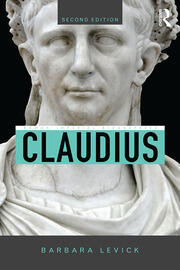
Barbara Levick is Fellow and Tutor Emeritus, St. Hilda’s College, Oxford. She has published extensively on Roman history, with titles including Tiberius the Politician (Routledge, 1999), Vespasian (Routledge, 1999), The Government of the Roman Empire, second edition (Routledge, 2001), Julia Domna: Syrian Empress (Routledge, 2007), Augustus: Image and Substance (2010) and Imperial Women of the Golden Age: Faustina I and II (2014).
"Levick’s work on Claudius continues to make a valuable contribution to the field and offers not just a strong foundation of information for those interested in Claudius, but also worthwhile material for anyone studying the Julio-Claudians or the Roman world of the first century CE." - Bryn Mawr Classical Review
