




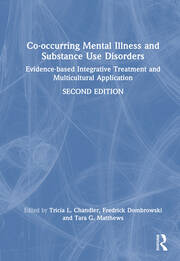
2nd Edition
Co-occurring Mental Illness and Substance Use Disorders Evidence-based Integrative Treatment and Multicultural Application
Section I: Disorders of Mental Health and Addiction 1. Trauma, PTSD, Substance Use, and Neuroscience 2. Mood and Anxiety Disorders 3. Psychotic Disorders 4. Personality Disorders 5. Attention Deficit Hyperactive Disorder (ADHD) 6. Process Use Disorders Section II: Populations 7. Multicultural Competency in Co-occurring Treatment 8. Women with Co-occurring Disorders 9. Men with Co-occurring Disorders 10. Adolescents with Co-occurring Disorders 11. Older Adults with Co-Occurring Disorders 12. LGBTQIA+ and Co-occurring Disorders 13. Military and First Responders with Co-occurring Disorders 14. Embracing Etuaptmumk “Two Eyed Seeing” for Recovery of Co-occurring Disorders 15. Bilingual Counseling and Familismo in Latine Communities: Reflections and Framework for Co-Occurring Disorders Section III: Integrative Treatment Approaches for Those with Co-occurring Disorders 16. Assessment of Co-Occurring Disorders, Levels of Care, and ASAM Requirements 17. Recovery Programming: 12-Steps, Cognitive Behavioral Therapy, and Motivational Interviewing 18. Biological Approaches: Pharmacotherapy, MAT, Orthomolecular Psychiatry, General Nutritional Considerations, and Psychedelic-Assisted Therapy 19. Consciousness: Spirituality, Mindfulness, Meditation, and Mindfulness-based Therapies 20. Creative Arts and Somatic Therapies: Psychodrama, Eye Movement Desensitization Regulation, and Body/Mind Therapies 21. How East Met West: The Emergence of Energy Psychology as a Body/Mind Approach 22. Animal-Assisted Psychotherapies 23. Components of Wellness for Clients and Therapists
Biography
Tricia Chandler, PhD, MA, LPC, MAC, Art Therapist, HomD, has taught for the past 16 years on both online and traditional university graduate programs for Professional Counseling, Marriage and Family Counseling, and Addiction Counseling Programs. In 2018-2020 Tricia was the liaison for revisions to the Addiction Counseling Program for Purdue University Global as the Subject Matter Expert to assist course lead instructors, leading to the recertification of the program with NCC AP.
Frederick Dombrowski, PhD, LMHC, CASAC, LPC, LADC, NCC, CCMHC, MAC, ACS, BC-TMH, HS-BCP, ICADC, DCMHS, has worked with children, adolescents, adults, and older adults living with co-occurring disorders in various treatment settings. His higher education career began in 2010, and he has provided education with mental health counseling programs, substance use programs, and post-graduate MD psychiatry programs. He served as President of AMHCA.
Tara G. Matthews, PhD, MA, LPC, has worked extensively with adolescents and adults in both the prevention and treatment of addiction. Over the past 22 years, her clinical work facilitating treatment groups as a licensed counselor and as an educator has continued to evolve with a focus on wellness, treatment of co-occurring disorders, and population-specific concerns. She currently serves as core faculty with Assistant Professor at Walden University.
“The new textbook Co-Occurring Mental Illness and Substance Use Disorders: Evidence-Based Integrative Treatment and Multicultural Application, 2nd Ed. is a primer in the co-occurrence of mental health and substance use disorders. The reader will learn the basics of special populations, from veterans and military, women, Latinx, LGBTQIA+, and the treatments thereof. A great learning and reference guide for anyone coming into the fields of mental health and/or substance use disorders and one to keep at your desk.”
Cynthia Moreno Tuohy, Dr HHL, BSW, NCACII, SUDP, NAADAC, Past Executive Director, author of Rein in Your Brain; from Impulsivity to Thoughtful Living in Recovery and the NIDA funded Samll Business Innovation Research program entitled Conflict Resolution in Recovery and Relapse Prevention
"This text is a refreshing, interdisciplinary guide for clinicians navigating the complexities of co-occurring disorders. The authors present a rich and expansive range of topics, spanning evidence-based interventions such as CBT, EMDR, and motivational interviewing; the indigenous wisdom of a 'two-eyed seeing' treatment approach; and the specialized needs of military personnel and the LGBTQIA+ community, while also emphasizing the importance of self-care among helping professionals. Overall, this book offers a unique, timely, and clinically rigorous framework that promotes treatment of the whole person within the context of their distinct cultural backgrounds and lived experiences.”
Aaron L. Norton, PhD, LMHC, LMFT, NCC, MAC, CRC, Assistant Professor of Counselor Education, University of South Florida
“Service members and first responders face unique risks for co-occurring disorders due to chronic stress, trauma exposure, and cultural barriers to seeking help. Including these populations in a book on co-occurring disorders is essential to advancing culturally competent, trauma-informed care that reflects their distinct experiences and promotes holistic recovery.”
Elizabeth Burgin, PhD, LPC, Military Behavioral Health Child Counselor, Center for Deployment Psychology, Immediate Past President – Military and Government Counseling Association
“This (military and first responder) chapter does an outstanding job presenting the tools necessary to effectively counsel those who are a part of the military and first-responder communities. From the use of a culturally informed approach, to the challenges most often faced by these communities, to the offering of helpful resources, readers will be equipped to provide competent care to those who 'run toward' rather than 'run from' life-threatening circumstances.”
W. Bryce Hagedorn, PhD, LMHC, NCC, MAC, QCS (FL), Professor and Program Director of Counselor Education, Fellow of the American Counseling Association
"In the chapter, Military and First Responders with Co-Occurring Disorders, authors Noah and Matthews provide a comprehensive, well-organized framework for understanding and treating co-occurring disorders among military personnel and first responders. The authors integrate key constructs such as being the outsider, moral injury, the stoic warrior, and military and first responder cultural competency to demonstrate how occupational identity can shape symptom expression, help-seeking behaviors, and treatment engagement. They make the chapter distinct by conveying the cumulative operational demands that increase their risk for behavioral health challenges, including co-occurring mental health and substance use disorders and the significant barriers that often prevent military and first responders from seeking and engaging in treatment. By addressing diagnostic complexities and reviewing empirically supported, culturally responsive interventions, the authors provide therapists with practical guidance for effectively serving these high-risk populations."
Edward (Franc) Hudspeth, PhD, NCC, LPC-S, ACS, RPT-S, RPh, Editor, Journal of Military and Government Counseling
"I found this to be a thoughtful and engaging overview of the mental health needs of service members, veterans, and first responders. It offers meaningful insight into their experiences and highlights why culturally informed care truly matters."
Duane K.L. France, MA, LPC, Co-Director of SAMHSA’s Service Members, Veterans, and their Families Technical Assistance (SMVF TA) Center at Policy Research Associates (PRA), Author of Combat Vet Don't Mean Crazy: Veteran Mental Health in Post-Military Life, Military in the Rear View Mirror: Mental Health and Wellness in Post-Military Life, Head Space and Timing: Veteran Mental Health from a Combat Veteran Perspective, Changing Your Point of View about #MemorialDay: What Does Memorial Day Mean to You? (with Eddie Lazzari, Andrew McDowell, Bennett Tanton, and Jeff Adamec)
