




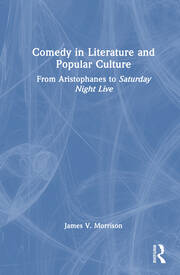

1st Edition
Comedy in Literature and Popular Culture From Aristophanes to Saturday Night Live
Acknowledgments
A Note on Translation
Chapter One. The World of Comedy
Chapter Two. Comic Heroes in Aristophanes and Heller’s Catch-22
Chapter Three. The Extreme Characters of Comedy
Chapter Four. Socrates, Memory, and the Power of Comedy
Chapter Five. Slaves, Masters, and Social Inversion
Chapter Six. Surrealism, Politeness Theory, and Comic Twins in Plautus and Shakespeare
Chapter Seven. Comedy in Tragedy: King Lear, The Bacchae, and Waiting for Godot
Chapter Eight. Modern Performance of Ancient Comedy: Aristophanes’ Frogs
Bibliography
Index
Biography
James V. Morrison is Professor of Classical Studies at Centre College in Kentucky, USA. His previous books examined Homer, Thucydides, and shipwreck narratives. He teaches courses on Greek and Latin languages and literature and Indo-European Linguistics.
“The conversational tone, explanatory textboxes, and not infrequent mention of his students and their experiences make this book an ideal fit for the undergraduate classroom; as a teacher of comparative ancient and modern comedy, I would certainly make use of it. The book’s primary originality lies in the exceptionally chosen comparisons. Morrison’s vivid descriptions of comic sketches highlight the performative nature of comedy and that it must be analyzed and understood as such… Scholarship on ancient comedy can too often forget that comedy is supposed to be funny. No such critique can be levelled at Morrison.”
Amy S. Lewis--Howard University Bryn Mawr Classical Review 2025.10.45
