




276 Pages
by
Routledge
276 Pages
by
Routledge
276 Pages
by
Routledge
Also available as eBook on:
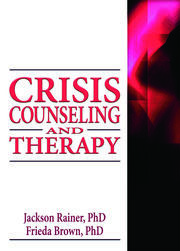
Comprehensive instruction in this important method From Pearl Harbor to the events of September 11, 2001, to the ravages of Hurricane Katrina, tragedy can leave indelible scars. Its many forms are now visibly present in our local, national, and international communities. Intervention, as a clinical technique to combat the debilitating effects of stress that accompany crisis, is quickly becoming... Read more
- Preface
- Chapter 1. An Introduction to the Systemic Model of Crisis Counseling
- Introduction
- Defining Crisis
- Critical Moments of Development
- The Systemic Model of Crisis Counseling
- Characteristics of the Crisis Counselor
- Chapter 2. Contemporary Standards and Models of Practice
- Introduction
- Three Dimensions
- Self-Psychology Theory
- Developmental and Normative Crises
- Systemic Crises
- Models for Intervention
- Models of Assessment
- Models of Treatment
- Chapter 3. Profile of an Individual in Crisis
- Introduction
- Affect
- Cognition
- Behavior
- Spiritual
- Multicultural Aspects of Crisis Counseling
- Chapter 4. The Systemic Crisis Intervention Model
- Introduction
- Narrative Therapy
- Cognitive and Cognitive-Behavioral Therapy
- Family Systems Therapy
- Experiential/Existential Therapy
- Memory Work and Trauma
- Chapter 5. Remembering the Crisis
- Introduction
- Step I.1. Sharing the Story
- Step I.2. Validate the Emotional Impact
- Step I.3. Evaluate the Context of the Crisis
- Step I.4. Protect Vulnerable Family Members
- Step I.5. Negotiate a Solvable Problem
- Step I.6. Network with Relevant Resources
- Chapter 6. Reorganizing the System After Crisis
- Introduction
- Step II.1. Formulating a Plan for Change
- Step II.2. Identify Developmental Issues
- Step II.3. Engage Therapeutic Tools
- Step II.4. Assign Homework
- Step II.5. Support Systemic Rules, Roles, and Rituals
- Chapter 7. Restoration and Exiting the System
- Introduction
- Step III.1. Track Progress Toward Goals
- Step III.2. Acknowledge Indicators of the Time to Terminate
- Step III.3. Address Future Sources of Stress
- Step III.4. Refer for Continuing Treatment
- Step III.5. Exit the System
- Chapter 8. The Impact of Crisis in the Lives of Children and Adolescents
- Introduction
- Developmental Characteristics of Children in Crisis
- Family Characteristics and Crisis
- Classification of Crises
- Death: A Crisis of Loss
- Crisis Related to Family Pathology
- Resilience
- Chapter 9. Application
- Introduction
- Natural Disaster
- The Crisis of Sexual Assault
- The Crisis of a Life Threatening Illness: Acute Lymphocytic Leukemia
- Chapter 10. Integrating the Stress of Crisis
- Introduction
- Reflexivity and Agency
- Confusion
- Fear and Anxiety
- Helplessness
- Moving Toward Recovery
- Meaning Making and Coping with Crisis
- References
- Index
Biography
Jackson Rainer, Frieda Brown
