




1st Edition
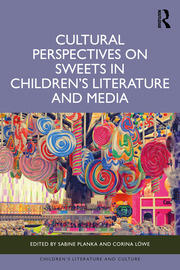
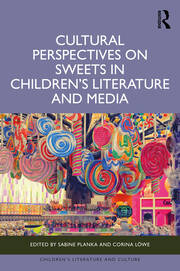
Cultural Perspectives on Sweets in Children’s Literature and Media
Notes on Contributors
Sweets in Children’s Literature and Media: A Short Introduction into a Sweet and Delicious Topic
CORINA LÖWE AND SABINE PLANKA
PART I
Sweets as an Expression of Culture and Cultural Attitudes as well as National Cuisines
1 Sugar – A Substance Between Health, Temptation, and Moral in German Dolls’ and Children’s Cookbooks from the 19th to 21st Century
SABINE PLANKA
2 ‘A Cookie Is a Sometime Food’. Cookie Monster and the Politics of Children’s Health on Sesame Street ABBY WHITAKER
3 Sugar Magic: Australian Children’s Literature, Sweets, and National Identity
PAUL VENZO
4 ‘We Do All This to Celebrate the Beauty of Life and Death Rather than Mourn It’: Sugary Skulls, Pan de Muerto, and the Context of Mexican Dia de Muertos in Children’s Books
SABINE PLANKA
5 Sweet Treats and Cultural Commentary in Studio Ghibli’s Kiki’s Delivery Service (1989) and Spirited Away (2001)
NERMIN KARADEMIR
PART II
Sweets as Key Moments for the Development of Characters and Interpersonal Relationships in Children’s Media
6 Swallowed Tears and Ice Cream: Sweets and the Lonely Child in East German Children’s Literature
CORINA LÖWE
7 The Emancipatory Milkshake: Sweets in a Swedish Girls’ Magazine
KRISTINA ÖHMAN
8 “Blond, Pink, and Porky”: The Dehumanisation of
Fat Characters Eating Sweets in British 20th-Century Children’s Book Classics
ÅSA WARNQVIST AND MIA ÖSTERLUND
PART III
Sweets in Children’s Literature and Media as Symbols and Metaphors
9 Tailor-Made Pastries in La signorina Euforbia: Food Pedagogy in Italian Pre-Teens’ Literature
SIMONA DI MARTINO
10 The Sweet Temptations of Fairy Tales: Exploring the Symbolic Role of Sweets
ARTEMIS PAPAILIA
11 “These Creatures Are Not Just Delightful, They’re Delicious”: The Cultural Meaning of the Trolls as Sweets in DreamWorks’ Trolls (2016)
PHILIP VAN DER MERWE
12 To Eat and/or Be Eaten: A Yummy Guide with Zombies Inside
COREY WHITLEY, DANIEL IHRMARK, AND JOHAN NILSSON
Index
Biography
Sabine Planka, Dr. phil., works as an academic librarian at the Martin-Opitz-Library (Herne, Germany) in the field of public relations, event management and project management, and as a visiting lecturer at Bielefeld University (Bielefeld, Germany) in the field of children's literature. Her research particularly focuses on children’s literature, cookbook literature, and literary food studies. She is also interested in aspects of space and gender theory, and she works in the field of film studies. Latest publications include, for example, “What and How Will We Eat in Future? Food Culture, Food System, and Food Memory in Cli-fi Novels for Young Adults” (2024, together with Corina Löwe), and “Meet to Eat. The Restaurant as Narrative Setting in Terry Gilliam’s Brazil (1985) and The Fisher King (1991)” in A Critical Companion to Terry Gilliam (2023) edited by Sabine Planka, Philip van der Merwe, and Ian Bekker.
Corina Löwe, PhD, is Associate Professor of German in the Department of Languages at Linnaeus University, Sweden. After her dissertation on East German children’s crime fiction (2011), she has continued her research on 20th- and 21st-century children’s literature, East German children’s literature, intermediality, and didactics of literature and language teaching. Together with Sabine Planka, she researches aspects of food and nutrition in children’s media. Her latest publication is an anthology of girls’ literature: “Flickor som löser gåtor. I flickdetektivernas värld” (in Flickboken & flickors läsning. Flickskapande nu och då, edited by Helene Ehriander and Corina Löwe, 2022) and "Power! No Doubt About It. Power Structures in Swedish Crime Fiction for Children" in Astrid Lindgren's Works (2021), edited by Helene Ehriander.
