





1st Edition
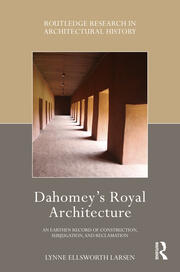
Dahomey’s Royal Architecture An Earthen Record of Construction, Subjugation, and Reclamation
List of Figures
Introduction
The Palace’s Plan, Fabric, and Function
Chapter Outlines
Methodology and Acknowledgments
1 The Fish that Escaped the Net: The Establishment of Dahomey
Coding a Spiritual Foundation: The Kingdom’s Supernatural Origins
Coding Local Building Practices: From Wawe to Abomey
Coding Political Power: Founding of the Palace in Abomey
Coding Gender: Hangbe
Interpreting and Capitalizing on the Code: Agadja
Conclusion
2 Like a Jar with Many Holes: The Palace in Pre-colonial Dahomey
Instability in the Eighteenth Century
The Contributions of Tegbesu, Kpengla, and Agonglo
Reshaping the Palace and Succession: Adandozan
Architecture of Power and Reception: The Palaces of Guezo and Glele
Conclusion
3 The Foot That Stumbled But Did Not Fall: The Palace under Colonial Rule
Fire and Restoration: Behanzin and Agoli-agbo I
Setting up Government: Victor Ballot and the Palace
Agoli-agbo’s Exile and the Rise of the Chefs de Canton
The Formation of the Historic Museum of Abomey and l’Institut Français d’Afrique Noire
Interpreting Dahomey through France’s Civilizing Mission
The Museum in its Colonial Context
Conclusion
4 The Shark and the Egg: The Post-colonial Palace
Independence: Reclaiming of the Palace in the Post-colonial Moment
Modernization of Materials
The Palace’s Official Partnership with UNESCO
Cooperative Projects in the Museum
Palace Restoration outside of the Museum
The Museum as a Post-colonial Entity
Conclusion
5 Nothing Can Force the Buffalo to Take off His Tunic: Dahomey’s Palace in Contemporary Abomey
Royal Vodun
Religious Purposes of the Pre-colonial Palace: Funerary Architecture and the Grand and Annual Customs
Tohosu and Nesuwhe
Dadassi
The Gandaxi
Conclusion
6 Conclusion
Bibliography
Index
Biography
Lynne Ellsworth Larsen is an Assistant Professor of Art History at the University of Arkansas at Little Rock, USA.
