




1st Edition
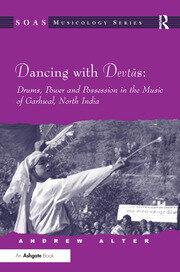
Dancing with Devtas: Drums, Power and Possession in the Music of Garhwal, North India
By Andrew Alter
Copyright 2008
302 Pages
by
Routledge
302 Pages
by
Routledge
302 Pages
by
Routledge
Also available as eBook on:
In the Central Himalayan region of Garhwal, the gods (devtas) enjoy dancing. Musicians - whether ritual specialists or musical specialists - are therefore an indispensable part of most entertainment and religious events. In shamanistic ceremonies, their incantations, songs and drumming 'make' the gods possess their mediums. In other contexts, such as dramatic theatrical renditions of stories of... Read more
Contents: Introduction: Part 1 Contextualising the Study: Sounding the drum: power and meaning in the context of performance: Dev Bhumi: land of the gods; Caste groups and instrumentalists; Performance genres and dance practice; Musical instruments in Garhwal; Dhol Sagar: the ocean of drumming. Part 2 Analysis and Description of Musical Events: Musical Power in the Context of Performance: Drumming associated with Pañdavalila; Music in the context of wedding celebrations; The Pawara of Kirthipal and Kunjepal; Conclusion;; Appendices; Glossary of selected Garhwali and Hindi terms; Bibliography; Discography of selected commercially released tapes; Index.
Biography
Andrew Alter is Senior Lecturer in Music at the University of New England, Australia.
’Andrew Alter’s fascinating book shows that music in Garhwal is more than just a system of organised sounds. Instead, it underpins a belief that Nada (’a pervading causal sound that animates the universe’) can be echoed on earth through the powerful practice of drumming. ... Alter provides closequarter detail on musical practice in both secular and sacred contexts and close scrutiny of the copious musical examples, while a 60-minute companion CD illustrates the text and his revealing analysis to telling effect.’ Songlines 'The book’s strength lies mainly in richly describing a fragment of an extensive drumming tradition... Alter’s work draws attention to the role of percussion not merely as accompaniment, but more importantly as the defining feature of musical events that are critical in religious and life-cycle rituals... In keeping with other books of the SOAS musicology series, this volume is handsomely produced - a hardcover book with a tastefully designed dust jacket, ample photographs and musical notations, a CD.' Asian Ethnology
