



1st Edition
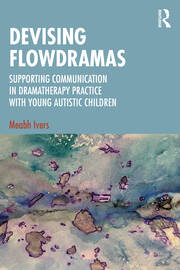
Devising Flowdramas Supporting Communication in Dramatherapy Practice with Young Autistic Children
Preface
Abstract
Chapter outline
Chapter 1: The need for communication
Describing communication
The joy of communication
The challenges of communication
Communicating before words
Missed opportunities for communication
The importance of context
Communication on the autism spectrum
Perspectives of autism
Developing communication on the autism spectrum
Different ways of perceiving
Autistic intersubjectivity
The influence of the social situation on communication
Developmental differences in autistic children’s distribution of interests
The double empathy problem
Flow states
Summary
Chapter 2: Communication approaches forms, modes and conditions
Approaches to communication
Forms of communication
Modes of communication
Optimal conditions for creating a facilitating environment to support communication with autistic children
Summary
Chapter 3: Dramatherapy to support communication with autistic children
Autism from a drama perspective
Dramatherapy with people on the autism spectrum
Theories to support dramatherapy practice
The enactive perspective
Child development and drama
Drama intersubjectivity and autism
Drama object relations and autism
Techniques to employ in dramatherapy practice
Creating a facilitating sensory environment
Dramatic ritual structure
Attunement
Mimesis improvisation and spontaneity
Play and flow
Shared flow states
Devising
Dramatic reality
Words for playing with and words for expression
The dramatherapist’s role
Summary
Chapter 4: Developing an approach, cases from the dramatherapy research study
Assessment questions
Case examples
George
Referral and assessment information
George’s communication strengths and needs
Risk and aversions
Aims
Rossa
Referral and assessment information
Rossa’s communication strengths and needs
Risk and aversions
Aims
Klara
Referral and assessment information
Klara’s communication strengths and needs
Risk and aversions
Aims
Joe
Referral and assessment information
Joe’s communication strengths and needs
Risk and aversions
Aims
Formulating cases from assessment information
Dramatherapy sessions
George
Outcomes from George’s sessions
Rossa
Outcomes from Rossa’s sessions
Klara
Outcomes from Klara‘s sessions
Joe
Outcomes from Joe’s sessions
Discussion of outcomes from the dramatherapy study
Examples from Klara’s mother’s account
Examples from George’s mother’s account
Discussion
Chapter 5: Devising Flowdramas: A framework for dramatherapy practice to support communication outcomes with young autistic children
Procedure
Forming modes of communication
Modes of expressive communication
George’s house game
Modes of receptive communication
Navigating contact
Improvising
Rossa’s throwing game
Devising
Joe’s animal drama sequence
Reflecting responding and attempting to understand
Klara with the cone
Discussion
Summary
Chapter 6: Setting up one-to-one dramatherapy practice autistic children
Contracting assessment and review processes
Sociocultural considerations
Ascent dissent and autonomy
Basic tenets for supporting the child’s agency
Diagnosis of autism spectrum disorder and other conditions
Case formulation
Clinical supervision and reflective practice
The dramatherapy space
Dramatherapy session structure
Materials
Summary
Chapter 7: Measuring communication outcomes in dramatherapy
Communication subcategories
Stages of contact
Completing the CROM+DT outcome measure
Steps for completion
Interpreting the scores
Summary
Chapter 8: Discussion recommendations and resources
Devising Flowdramas
Communication outcomes
Shared flow states in dramatherapy build gratifying experiences of communication
Collaboration with the family
Challenges and the limitations
The dramatherapy space
Limited sessions
Anxiety
Getting lost in flow
The ethical tension of the double empathy problem belongs to us all
Learning to wait and give the child time
Further applications and progression of the Devising Flowdramas framework
Conclusion
Appendixes
Index
Biography
Meabh Ivers is a researcher, registered dramatherapist, drama practitioner and clinical supervisor practising in Northern Ireland.
