





1st Edition
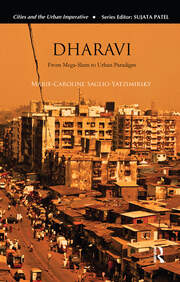
Dharavi From Mega-Slum to Urban Paradigm
List of Plates. List of Maps. Transliteration of vernacular terms. Names of places and persons. Preface. Acknowledgements. Introduction. Part I. Dharavi’s Origins 1. Unaccountable land and people 2. Migratory crossroads 3. ‘A city within the city’ 4. The Dharavi way of life. Part II. Dharavi’s Population 5. Castes and leather worker communities of Dharavi 6. Dimensions of untouchability 7. Obsession with status. Part III. Dharavi’s Workers 8. The informal leather sector in Dharavi 9. Organisation of work 10. Made in Dharavi: Outlets and distribution 11. Dharavi: A globalised informal sector? Part IV. Dharavi’s Citizens 12. From caste associations to political associations 13. The politicised housing issue 14. From casteist politicisation to democratisation (1990–2010) 15. Dharavi: World centre for alternative urbanism (2000–10). Conclusion: Dharavi: Mumbai’s heartbeat. Select Bibliography. About the Author. Index
Biography
Marie-Caroline Saglio-Yatzimirsky is Professor, Social Anthropology of South Asia, Institute for Oriental Studies (INALCO), Paris.
