




1st Edition
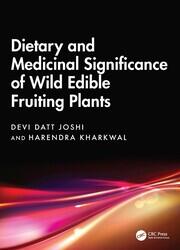
Dietary and Medicinal Significance of Wild Edible Fruiting Plants
Part I: Introduction
- Ethnobotany, Ethnopharmacology, and Bioprospecting
- Nutrient Analysis, Methodologies, and Outcomes
Part II: Description
3. Aesculus indica – Indian Horse Chestnut
4. Amelanchier spicata – Saskatoon Berry
5. Berberis aristata – Kinmod
6. Cassia fistula – Amaltas
7. Carissa spinarum – Karonda
8. Cornus capitata – Bamora
9. Dioscorea bulbifera – Air Potato
10. Diploknema butyracea – Chiura
11. Ficus auriculata – Timla
12. Ficus palmata – Bedu
13. Garcinia cowa – Kuji Thekera
14. Garcinia pedunculata – Bor Thekera
15. Juglans regia – Akhrot
16. Morus alba – Mulberry
17. Myrica esculenta – Kaphal
18. Nyctanthes arbor-tristis – Pari Jat / Har Singhar
19. Prunus cerasoides – Padmaka / Panyyan
20. Prunus persica – Aru / Peach
21. Punica granatum – Dadim
22. Pyracantha crenulata – Ghingharu
23. Pyrus pashia – Mehal
24. Pyrus pyrifolia – Nashpati / Wild Pear
25. Quercus leucotrichophora – Banj / Oak
26. Rubus ellipticus – Yellow Himalayan Raspberry
27. Rubus occidentalis – Black Raspberry
28. Solanum nigrum – Black Night Shade
29. Syzygium cumini – Jamun
30. Terminalia chebula – Haritaki / Harad
31. Viburnum opulus – Crampbark
32. Zanthoxylum armatum – Timur
33. Zizyphus maurifiana – Ber
Part III: Conclusion
34. Safety and Regulatory Aspects
35. Research Avenues
Biography
Devi Datt Joshi is a distinguished scientist with extensive experience in phytochemistry and phytomedicine. Currently serving as the Director of Himalayans Herbs Research and Cultural Welfare Society in Ghaziabad. His career includes important positions such as Assistant Director & Head of Institute at Amity Institute of Phytochemistry & Phytomedicines, and Scientist E at IBSD-Imphal. Dr. Joshi holds a Ph.D. in Chemistry (Natural Product Chemistry) from ITRC Lucknow and KU Nainital. He has filed 56 patents, with 14 granted, published 52 papers, presented at 18 conferences, contributed as an independent author to 8 chapters, and authored 4 books, demonstrating his commitment to advancing knowledge in his field.
Harendra Kharkwal has a Ph.D. in medicinal and aromatic plants from Kumaun University in Nainital. He is currently the Director Scientist at the Ministry of Environment, Forest and Climate Change in New Delhi, India. His main focus is on research and development to improve environmental research in natural resources and clean technologies to minimise waste. Dr. Kharkwal is also a member of the Working Group on Remediation for Soil and Groundwater Pollution in the Asian and Pacific Region at headquarter Taiwan. He serves on the editorial boards of several international research publishing groups as well.
