




1st Edition
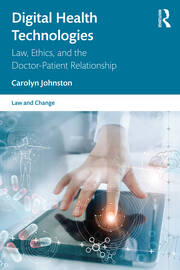
Digital Health Technologies Law, Ethics, and the Doctor-Patient Relationship
1.Introduction 2. Digital genomic sequencing–who should have access to genomic information? 3. Internet of things and personalised medicine – ‘diy’ ing diabetes management 4. Smart phone apps for mental health 5. AI in diagnosis of health conditions 6. Symptom checker chatbots and informed consent 7. Telehealth –what has been learned through the covid-19 pandemic? 8. Robotic care assistants and older adults 9. A new use for existing technology - digital advance care decisions.
Biography
Carolyn Johnston is a legal scholar specializing in health law and an experienced clinical ethicist. She is currently chair of the Clinical Ethics Response Group at Monash Children’s Hospital, Melbourne, where she provides leadership in complex ethical decision-making in paediatric healthcare. Widely published in the fields of health law and clinical ethics, she is the author of the monograph, Digital Health Technologies: Law, Ethics and the Doctor–Patient Relationship (Routledge, 2022) and co-author of the textbook 100 Cases in Clinical Ethics and Law (Routledge, 2nd ed., 2015).
‘This book provides an excellent overview of the types of digital technologies that are being introduced into the clinic and the way that they are changing clinical practice. Using carefully selected case studies, the book analyses the complex ethical, legal and regulatory issues that are raised by implementing digital innovation. Carolyn Johnston is a lawyer who is well equipped to do this, having had many years working with clinicians and scientists who are navigating these issues. The threads that go through this book will provide readers with a rich understanding of these complex issues and generate insights into the way that clinical practice is changing.’
Jane Kaye, Professor of Health, Law and Policy and Director of the Centre for Health, Law and Emerging Technologies (HeLEX) at University of Oxford
‘Carolyn Johnston's book offers plain language insights into the complex and rapidly expanding world of digital health technologies. Consumers want the best, most convenient technologies to manage their health, yet clinicians may be wary of the traditional relationship power shifts and treatment efficacy concerns that result from the digital health care revolution.
Johnston explores eight new technologies and takes us back to the fundamentals of ethics, respect, humanity and evidence that should guide consumers, clinicians, regulators and society more broadly as this revolution unfolds. A timely scholarly contribution.’
Mark Cormack, Honorary Professor at the College of Health and Medicine, Australian National University (ANU)
