




1st Edition
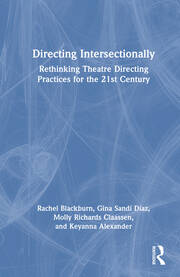
Directing Intersectionally Rethinking Theatre Directing Practices for the 21st Century
1. Applying an Intersectional Lens to Your Creative Process 2. Diversity, Equity, Inclusion, Belonging, and Accessibility 3. Challenging the Canon: Dramaturgy and Adaptation Resources to Direct Classical Texts 4. Sustainable Systems of Care 5. The Pre-Production Process 6. Recruitment, Auditions, and Casting 7. The Rehearsal Process, Tech, Performances, and Audience Engagement 8. Theatre in Higher Education 9. Resources
Biography
Rachel E. Blackburn, M.F.A., Ph.D. (She/They), is a director, performer, scholar, and professor. She currently serves as a Sr. Learning and Enablement consultant with UserTesting, assisting clients with UX research. She has greatly enjoyed teaching courses on intersectional identity and performance, comic performance, directing, acting, dramaturgy, devised theatre, theatre history, improvisation, audition technique, and more at over a dozen universities.
Gina Sandí Díaz, Ph.D. (She/Her), is Associate Professor of Theatre in the Department of Theatre and Dance at California State University, Fresno (Fresno State). Her creative practice and scholarship center on intersectionality, identity, and Latine and Latin American theatre. She is a member of the Latinx Theatre Commons, the American Theatre and Drama Society, the American College Theatre Festival, and the Association of Theatre in Higher Education.
Molly Richards Claassen, M.F.A. (She/Her), is a Professor of Directing and Head of the BA program at Columbus State University. She is a member of Actors’ Equity Association and an associate member of Stage Directors and Choreographers Society. Her research, presentations, and publications concentrate on intersectional directing, directing pedagogy, and motherhood in the performing arts and academia.
Keyanna Alexander (She/They), is a freelance director, playwright, and theatre administrator. They currently work in the theatre scene in Minneapolis, Minnesota (U.S.). Keyanna has previously served in leadership positions for the National Black Theatre Festival (NC), Women’s Theatre Festival, and the Southeastern Theatre Conference’s Women+ in Theatre Committee. They have directed in association with North Carolina Central University, the University of North Carolina at Chapel Hill, and Duke University.
