




1st Edition
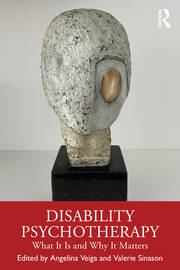
Disability Psychotherapy What It Is and Why It Matters
Disability Psychotherapy: What It Is and Why It Matters
Angelina Veiga and Valerie Sinason
SECTION A: History of Disability Psychotherapy
1. Implications for Training: How the Principles of Disability Psychotherapy Can Be Integrated Into Mainstream Psychotherapy Training
David O'Driscoll
2. Three Magnificent Women and One Lovestruck Man: The Professionalism of Disability Psychotherapy
Brett Kahr
3. How Working with Disabled People Can Make Us Better Psychotherapists
Shula Wilson
SECTION B: Working as a Disability Psychotherapist
4. Du sei wie Du about Love and Passion
Johan De Groef
5. Seeking Custody, Post Custody: Applying Disability Psychotherapy Thinking in the Criminal Justice System
Richard Curen
6. The Respond Model of Disability Psychotherapy: The Attachment-Based Systems Approach
Noelle Blackman, Jess Lammin, Jasmine Hill, and Rosie Creer
7. From Trauma to Creative Integration: Disability Psychotherapy and the Evolution of a Systemic Model of Trauma Treatment for Vulnerable Children and Adults
Eimir McGrath
8. Becoming a Disability Psychotherapist
Angelina Veiga
SECTION C: Applications of Disability Psychotherapy
9. Understanding the Effects of Trauma in People with Intellectual Disability: Looking at Diagnosis of Post Traumatic Stress Disorder
Georgina Parkes
10. Relationship, Imagination, Justice and Hope: Throughlines in Child Psychotherapy, Trauma, Learning Disability and Social Exclusion
Tasmin Cottis
11. In Search of Eclecticism as a Means to Navigate the Complexities of Disability Psychotherapy
Nancy Sheppard
12. Treating Psychosis with Respect: Including the Contribution of Dr Phoebe Caldwell
Elspeth Bradley
13. Therapy with Dr Alan Corbett
François Marshall and Marvin Marshall-Springer
Epilogue
Valerie Sinason
Biography
Angelina Veiga, DProf Psych Psych, is a child and adolescent psychoanalytic psychotherapist, adult psychotherapist, disability psychotherapist, clinical supervisor, researcher and visiting lecturer. A disability psychotherapist for over 20 years, she is a longstanding trustee of the Institute of Psychotherapy and Disability (IPD) and a founding member of Disability Psychotherapy Ireland.
Valerie Sinason, PhD is a poet, writer, lecturer, largely clinically retired adult psychoanalyst and President of the IPD. Having specialised in disability and trauma for 40 years, she has published or edited 25 books and over 250 papers and chapters. She was given the International Society for the Study of Trauma and Dissociation (ISSTD) Life Achievement Award in 2017 and the 2022 Innovative Excellent Award from the British Psychoanalytic Council (BPC).
'I congratulate and thank all the people who have contributed to this volume. The work has come on so far since we started the Institute of Psychotherapy and Disability and yet access to disability therapy remains poor. This book will add weight to the arguments for making disability psychotherapy available to all who need it, and as a specific training for dedicated therapists. Well done and thank you!'
Pat Frankish
, founder member, Institute of Psychotherapy and Disability; past President of the British Psychological Society
'The authors of this wonderful book carry on the proud tradition begun by the Founders of the Institute of Psychotherapy and Disability, inspiring hope where there is often therapeutic nihilism, and understanding where there is often denial.'
Baroness Sheila Hollins,
former President of the Royal College of Psychiatry
'Learning disabled people do have minds and can benefit cognitively and emotionally from a specialized form of psychotherapy. This is a wonderful and revelatory book.'
Anne Alvarez
