





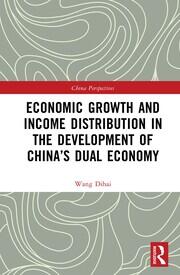
1st Edition
Economic Growth and Income Distribution in the Development of China’s Dual Economy
Introduction Part 1 1. China's Economic Growth: 1960-2016 2. China's Economic Growth and People's Livelihood after Reform 3. Changes in GDP Expenditure Structure and Breakdown of Demand Factors in GDP Growth 4. Changes in Chinese Industrial Structure and the Industry Decomposition of GDP Growth 5. Changes in Employment Structure of Industries and Decomposition of Industrial Structure for Real GDP Growth per Labor Part 2 6. The High Saving, Investment and Economic Growth of China 7. China's Real Estate Development and Econom ic Growth 8. Education Development in China's Economic Growth Process 9. Contribution of China's Education Development to Economic Growth 10. Medical and Healthcare Development with China's Economic Growth 11. The Impact of Health on China's Economic Growth Part 3 12. Changes and Status Quo of the Income Distribution in China 13. Imperfect Labor Market, Unbalanced Regional Economic Development and Regional Income Gap 14. Labor Market Monopoly, Minimum Wage Restrictions and Inequality 15. Review on China's Minimum Wage System from the Perspective of Income Distribution and Economic Development 16. Causes and Countermeasures of China's Widening Income Gap
Biography
Wang Dihai is a professor of economics and Deputy Director in the School of Economics at Fudan University, China. His main research fields include macroeconomics, income inequality, health economics, economic restructuring, and economic growth.
