




1st Edition
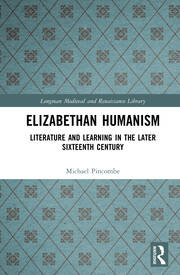
Elizabethan Humanism Literature and Learning in the Later Sixteenth Century
By Michael Pincombe
Copyright 2002
224 Pages
by
Routledge
224 Pages
by
Routledge
224 Pages
by
Routledge
Also available as eBook on:
The term 'humanist' originally referred to a scholar of Classical literature. In the Renaissance and particularly in the Elizabethan age, European intellectuals devoted themselves to the rediscovery and study of Roman and Greek literature and culture. This trend of Renaissance thought became known in the 19th century as 'humanism'. Often a difficult concept to understand, the term Elizabethan... Read more
PART 1: CONTEXTS Chapter 1: Elizabethan Humanism Chapter 2: Ciceronian 'Humanitas' Chapter 3: Humanists and Humanitians Chapter 4: The Translation of Humanity: Thomas Smith and Roger Ascham Chapter 5: The Arch-Humanist: Gabriel Harvey PART 2: TEXTS Chapter 6: Pregnant wit: John Lyly's Euphes: 'The Anatomy of Wit'
Chapter 7: Pastoral Rudeness: Edmund Spenser's 'The Shepherd's Calendar' Chapter 8: The Companion of the camps: Sir Phillip Sidney's 'An Apology for Poetry' Chapter 9: Divinity, Adieu: Christopher Marlowe's 'Doctor Faustus' Chapter 10: Imitations of Humanity: William Shakespeare's 'Hamlet, Prince of Denmark'
Chapter 7: Pastoral Rudeness: Edmund Spenser's 'The Shepherd's Calendar' Chapter 8: The Companion of the camps: Sir Phillip Sidney's 'An Apology for Poetry' Chapter 9: Divinity, Adieu: Christopher Marlowe's 'Doctor Faustus' Chapter 10: Imitations of Humanity: William Shakespeare's 'Hamlet, Prince of Denmark'
Biography
Michael Pincombe
