




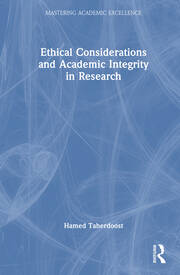

1st Edition
Ethical Considerations and Academic Integrity in Research
Acknowledgements
Preface
Chapter 1. Understanding Ethics in Research
Chapter 2. The Foundations of Academic Integrity
Chapter 3. Common Ethical Challenges in Research Practices
Chapter 4. Plagiarism and Its Implications
Chapter 5. Data Integrity: Ensuring Accuracy and Reliability
Chapter 6. Conflicts of Interest in Research
Chapter 7. The Role of Institutional Ethics Committees
Chapter 8. Ethics in Collaborative Research
Chapter 9. Addressing Misconduct in Academia
Chapter 10. Emerging Ethical Issues in Digital and AI-Driven Research
Chapter 11. Cultivating a Culture of Integrity in Academia
Chapter 12. Practical Strategies for Ethical Decision-Making
Chapter 13. Ethical Use of Artificial Intelligence in Research Practices
Index
Biography
Dr Hamed Taherdoost is an award-winning research methodologist and internationally recognized scholar specializing in research design, academic writing, and research ethics. He is a Full Professor at University Canada West, Canada, where he contributes to advancing methodological rigor and academic integrity across disciplines.
He is the author of numerous scholarly works, including widely adopted books on research methodology such as Maximizing Research Impact through Enhancing Research Visibility, Write it Right and Navigating Qualitative Research: A Comprehensive Guide to Methods and Practices.
He also serves as the Series Editor of Routledge’s Mastering Academic Excellence: Research, Teaching, Learning, and Publishing, a global initiative aimed at strengthening research and publishing practices. In addition, he contributes to the academic community through editorial and review roles with leading international journals, supporting the quality, transparency, and ethical standards of scholarly publishing.
Beyond academia, Dr Taherdoost has held senior roles in research and development and has worked extensively with organizations across multiple sectors to evaluate and structure research and innovation projects. His work emphasizes integrity, transparency, and responsibility as foundational principles of the research process, positioning ethics not merely as compliance, but as essential to producing credible, impactful, and socially responsible scholarship. Through his teaching, publications, and mentorship, he continues to guide researchers in addressing the ethical complexities of contemporary research.
