





1st Edition
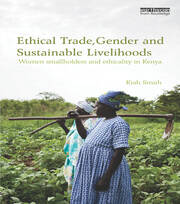
Ethical Trade, Gender and Sustainable Livelihoods Women Smallholders and Ethicality in Kenya
Part 1: Problematizing Ethical Trade
1. Ethicality in the Global Food System
2. Global Ethics or Northern Values?
3. Gender and Ethical Sourcing in Kenya
4. Alternative Ways of Knowing
Part 2: Learning from Women Smallholders
5. Mapping Food Networks from the Ground Up
6. Participation, Livelihoods and Empowerment
7. Conventions of Ethicality?
8. Lessons for Ethical Trade
Biography
Kiah Smith is a sociologist and Research Associate in the School of Social Science at The University of Queensland, Australia. She was previously a Research Analyst at the United Nations Research Institute for Social Development based in Geneva, Switzerland.
"Ethical trade is premised upon fairness in the production and distribution of goods and services. But fair for whom? In this provocative and engaging account of the lives of smallholder farmers in Kenya, Kiah Smith argues that women employed within systems of ethical trade remain disadvantaged and marginalized. Countering this, their participation in women’s groups offers a space for resistance and opportunities for empowerment. The book provides a novel and innovative framework for interpreting the lives of men and women as they enter employment with nationally- and globally-based food sourcing companies. It is a ‘must read’ for academics, students and policy makers wishing to understand the ethical dimensions of gender and development." – Geoffrey Lawrence, Emeritus Professor of Sociology, The University of Queensland, Australia and President, International Rural Sociology Association
