




1st Edition
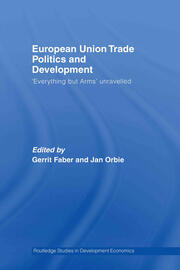
European Union Trade Politics and Development 'Everything but Arms' Unravelled
1. Introduction: The Relevance of EBA for Europe’s Trade and Development Policies 2. The Development of EBA 3. The North-South Dimension within the European Union: Conflicts over EBA 4. Bureaucratic Competition in EU Trade Policy: EBA as a Case of Competing Two-level Games 5. The Political Dynamics behind US and EU Trade Initiatives Towards the Least-developed Countries 6. Unilateral Trade Preferences of the US and the EU: Their Effectiveness for Sub-Saharan Exports and the Role of Geography and Institutions 7. Unilateral Trade Preferences of the US and the EU: Their Effectiveness and the Role of the Rules of Origin in the Apparel Sector 8. Symbolic and Effective?: An LDC Perspective on Duty- and Quota Free Market Access 9. The Significance of the EBA Scheme for CAP Reform 10. X EBA and the EU Sugar Market: Development Gift or Trojan Horse? 11. EU-ACP Negotiations on Regional Partnership Agreements and EBA 12. Normative Power Europe?: EBA, Economic Partnership Agreements and Benevolent Self-images. Conclusion: All About Nothing?
Biography
Gerrit Faber is Associate Professor of International Economics at Utrecht University, the Netherlands.
Jan Orbie is Assistant Professor in EU Politics at Ghent University, Belgium.
